Chiang Mai is Thailand’s cultural and spiritual heart in the mountainous north, a city that balances ancient Lanna heritage with a modern, laid-back lifestyle. It matters because it offers a distinctly different, slower-paced, and more affordable experience than Bangkok, drawing travelers for its 300+ temples, vibrant food scene, and easy access to nature. This guide is for first-timers, budget-conscious travelers, and independent explorers seeking genuine, un-sugarcoated advice.
Key Takeaways
- The real Chiang Mai is in the Old City, a square mile of history encircled by a moat, where ancient temples sit next to modern coffee shops. Skip the high-rise hotel zones if you want the authentic experience.
- Wat Phra That Doi Suthep is non-negotiable, but the 306-step climb (or the tram) is only half the experience. The real magic is the 360-degree view of the city and the cool mountain air .
- Khao soi is the local religion; this creamy coconut curry noodle soup is the defining dish of Northern Thailand. You haven’t really been to Chiang Mai until you’ve had it from a street stall.
- Budget for about 1,900-2,000 THB ($60 USD) per day for a comfortable mid-range stay, including a nice guesthouse, eating out, and local transport .
- February to April is the “burning season.” The air quality can become hazardous due to agricultural fires. If you have respiratory issues, avoid these months .
- Forget the buses. The red songthaew trucks are the backbone of local transport. Flag one down, tell the driver where you’re going, and pay 30 THB for a ride within the city .
- Skip the elephant rides. They’re cruel. Visit ethical sanctuaries like Elephant Nature Park where you can observe and feed them, not ride them .
Quick Facts Block
- Location: Northern Thailand, in the Mae Ping River basin.
- Region: The capital of the former Lanna Kingdom.
- Opening Hours: Temples generally open from 6:00 AM to 6:00 PM. The Sunday Walking Street market runs from around 4:00 PM to midnight.
- Entrance Fee: Varies; Wat Phra That Doi Suthep is 30 THB for foreigners . Many city temples like Wat Chedi Luang and Wat Phra Singh are free, though donations are appreciated.
- Dress Code: Modest clothing is required for all temples. Cover shoulders and knees. A light sarong or scarf is a good idea if you’re wearing shorts.
- Best Time of Day: Early morning (before 8:00 AM) to explore temples before the heat and crowds arrive, or just after sunset for the markets.
- Best Months to Visit: November to February offers the most comfortable weather (cool and dry) .
- Estimated Visit Duration: At least 4 to 5 days to get a feel for the city and take a day trip or two .
- Photography Rules: Generally allowed in temple grounds, but always be respectful. Flash photography may be restricted in certain areas.
Overview / Introduction
You’re not coming to Chiang Mai for beaches. You’re coming because Bangkok’s chaos sounds exhausting, and you’ve seen one too many photos of monks walking through misty mountain temples. And you’re right. This city, the former capital of the Lanna Kingdom, is the cultural heavyweight of Thailand. It’s a place where the spiritual and the digital collide, creating a vibe that’s entirely its own.
Founded in 1296 by King Mangrai, Chiang Mai is older than many European capitals . It was the center of a powerful kingdom that spanned parts of modern-day Thailand, Myanmar, and Laos. That history is baked into the city’s very bricks, especially within the confines of the Old City. You’ll see it in the crumbling, ancient stupas, the intricate Lanna-style wood carvings on temple roofs, and even in the local dialect.
Chiang Mai is not just a city; it’s an experience for the soul.
For decades, the city has been a magnet for backpackers, expats, and more recently, a massive wave of digital nomads. They come for the low cost of living, the reliable internet, and the creative energy that has turned neighborhoods like Nimmanhaemin into a haven of coffee shops and co-working spaces. But beneath the modern, trendy surface, the city retains its deep Buddhist roots. It’s this unique mix of old and new that makes it so compelling. You can spend your morning in silent meditation at a 700-year-old forest temple and your afternoon arguing about the merits of a new coffee pour-over method.
This is not a guide to a pristine, untouched paradise. Chiang Mai is a city of over a million people; it’s gritty, crowded, and the traffic can be a nightmare. It’s not a place for luxury spa retreats unless you’re prepared to pay for them. And it’s certainly not a place to find a “secret” temple. The famous ones are famous for a reason, and they’ll be full of tourists.
What to See & Do

The Essential Temples
- Wat Phra That Doi Suthep: The most important temple in the north. Perched on a mountain, it offers panoramic views and houses a relic of the Buddha. A must-see, despite the crowds .
- Wat Chedi Luang: The “Temple of the Great Stupa.” This massive, partially ruined structure is the heart of the Old City and was once home to the Emerald Buddha .
- Wat Phra Singh: A stunning example of classic Lanna architecture, with an elaborate main hall and highly revered Buddha image .
- Wat Umong: A unique, forest-draped “tunnel temple.” The underground passages and serene atmosphere make it a favorite for those seeking peace .
- Wat Sri Suphan (Silver Temple): A more recent addition, this temple is covered in intricate silver and aluminum ornamentation. Note that women are not allowed inside the main hall per local tradition .
Beyond the Temples
- The Sunday Walking Street (Thanon Ratchadamnoen): This is the granddaddy of Chiang Mai’s markets. It’s not just a market; it’s a weekly street festival of food, crafts, and music .
- Nimmanhaemin (Nimman) Area: The city’s trendy hub. It’s a grid of streets packed with boutique shops, art galleries, world-class coffee roasters, and international restaurants .
- Bua Thong “Sticky” Waterfalls: About an hour from the city, these waterfalls are made of limestone that is textured and non-slippery, allowing you to climb right up the cascades. It’s a genuinely unique, free experience .
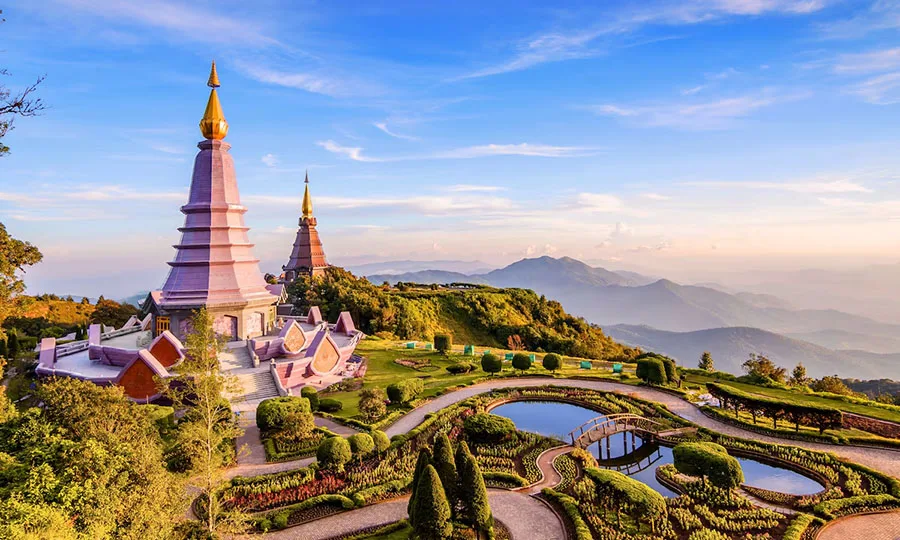
- Doi Inthanon National Park: Home to Thailand’s highest peak. The park is famous for its beautiful waterfalls, nature trails, and the twin royal pagodas built for the King and Queen .
How to Get There

From Bangkok
- Plane: By far the fastest and most common option. Flights from Bangkok (both Don Mueang and Suvarnabhumi airports) take about 1 hour and 20 minutes. Budget airlines like AirAsia and Nok Air make this very affordable.
- Overnight Train: A classic and romantic (if slow) journey. The sleeper train from Krung Thep Aphiwat Central Terminal in Bangkok takes 12-14 hours. It’s a great way to save on a night’s accommodation and see the countryside.
- Bus: The cheapest, but least comfortable option. Overnight VIP buses take about 9-10 hours and are a test of endurance for some.
From the Airport (CNX)
- Grab/Bolt: The easiest and most reliable option. A ride to the Old City costs around 150-200 THB.
- Airport Taxi: Available at a counter, with fixed prices depending on your destination.
- Rote Daang (Red Truck): The cheapest option. You can find them waiting outside arrivals. A shared ride might cost 50-100 THB per person, but you’ll have to agree on the price in advance .
Best Time to Visit
The weather in Chiang Mai dictates almost everything. Here’s the breakdown:
- November – February (Cool & Dry Season): This is the “best” time. Temperatures are pleasant, and humidity is low. It’s peak season, so expect crowds and higher prices for accommodation. Book your stay well in advance.
- March – May (Hot & Smoky Season): This is the burning season. Farmers in the north and neighboring countries burn agricultural land, leading to a thick blanket of smog. The air quality index (AQI) can be hazardous, making it unpleasant for those with respiratory issues. If you don’t need to go during these months, don’t .
- June – October (Rainy Season): The rains come, usually in the afternoons. It’s hot and humid, but the countryside is at its most lush and green. This is the low season, so you’ll find great deals and far fewer tourists. Be prepared for your outdoor plans to be rained out.
Costs & Budget
Chiang Mai is famously affordable, but “cheap” is relative. Here’s a realistic look at prices in 2026 .
If you skip Chiang Mai, you skip the heart of Thailand’s cultural identity. You’ll miss the feeling of walking through a city that’s been a center of power and spirituality for over 700 years. You’ll miss a culinary experience that is completely different from the food in the south or in Bangkok. And you’ll miss the opportunity to understand why this city has captured the imagination of travelers and expats for generations. The “Price” is the difference between seeing Thailand and feeling it.

Truth: The Digital Nomad Fantasy
One of the most common phrases you’ll hear is that Chiang Mai is the “digital nomad capital of the world.” It is. And that’s both a blessing and a curse. The presence of thousands of remote workers has driven up rents in trendy areas like Nimman, created a “scene” that can feel more like a western co-working space than a Thai city, and commodified the “local life” experience. The truth is, you can very easily spend your entire time in a bubble of western cafes and guesthouses.
Don’t make that mistake. The real city exists on the streets of the Old City, in the markets of Warorot, and in the conversations with the elderly monk at Wat Umong. Embrace the modern amenities, but actively seek out the authentic roots that make this place special.
Tips & Etiquette
- Dress Code: This is non-negotiable. When visiting temples, your shoulders and knees must be covered. Sleeveless shirts and short shorts/skirts will get you turned away.
- Remove Your Shoes: Always take your shoes off before entering a temple building’s main hall.
- Be Quiet: Temples are places of worship. Loud conversations or inappropriate behavior is deeply disrespectful.
- Respect Buddha: Never point your feet at a Buddha image or pose for a photo with your back to it. It’s considered highly offensive .
- Negotiate Fares: Always agree on a price with a tuk-tuk or songthaew driver before you get in . For ride-hailing apps like Grab or Bolt, the price is fixed.
- Watch for Motorbikes: Traffic in Chiang Mai is chaotic, and sidewalks can be uneven. Keep your wits about you when crossing the street.
- Be aware of your water: Bottled or filtered water is the safest choice. Tap water is not safe for drinking .
Nearby Places & Alternatives
If you have more time, the area around Chiang Mai is spectacular.
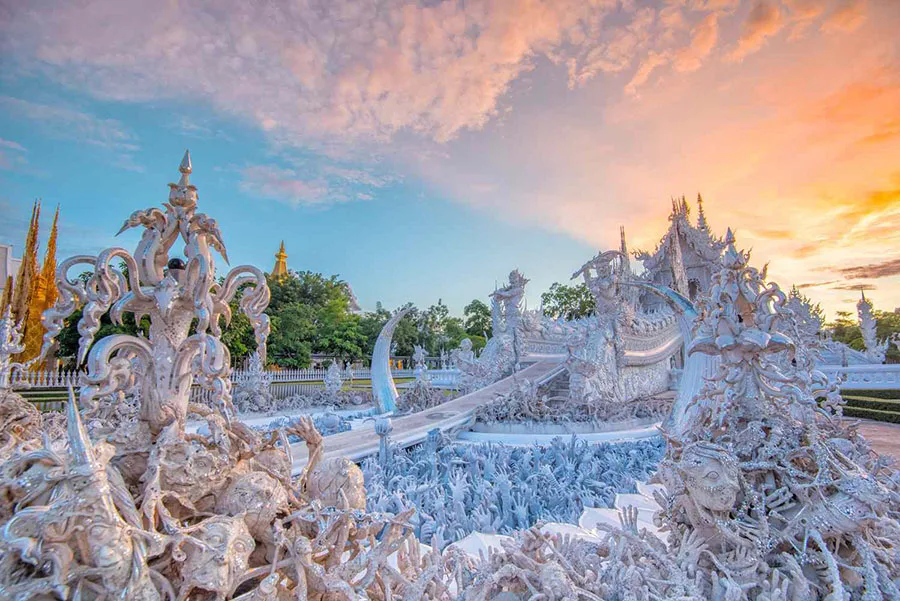
- Chiang Rai: About 3 hours north by bus. This is the home of the famous (and surreal) White Temple (Wat Rong Khun) .
- Pai: A small, backpacker-focused town 3 hours northwest in the mountains. Known for its beautiful scenery, relaxed vibe, and hippie culture.
- Lamphun: Just a short drive south, this is a small, historical city with a much quieter atmosphere and a famous, ancient chedi (Wat Phra That Hariphunchai).
- Mae Kampong Village: A stunning, traditional village in the mountains, about an hour east. Famous for its tea plantations, coffee, and homestays .
Summary
Chiang Mai offers a slower, richer, and more spiritual side of Thailand. It is a city of ancient history and modern convenience, of spicy curries and cool mountain air. To get the most out of it:
- Explore the Old City on foot: It’s where the city’s soul resides.
- Time it right: Avoid the smoke of March and April at all costs.
- Eat local: Khao soi isn’t just a dish; it’s an experience.
- Get on a songthaew: It’s the most authentic way to get around.
FAQ
Four to five days is enough for a solid introduction, but a week allows for a more relaxed pace and includes a couple of day trips to places like the Sticky Waterfalls or Doi Inthanon.
No. Chiang Mai is significantly cheaper than Bangkok, especially for accommodation and food. While Bangkok has more high-end luxury options, your day-to-day costs in Chiang Mai will generally be 20-40% lower.
Yes, it’s possible and many do. But it’s not recommended for beginners. Thai traffic is chaotic, and the police frequently set up checkpoints. You will need a valid motorcycle license (with an International Driving Permit) and must wear a helmet. Your travel insurance may be void if you have an accident without the proper license.
The official language is Thai, but the local dialect is Lanna (Kham Mueang). However, English is widely spoken in the main tourist and expat areas, making it easy to get by.
Walking is the best way to explore the core of the Old City. It’s easy to get around on foot and discover hidden temples and cafes. For longer trips, use a songthaew, tuk-tuk, or a ride-hailing app.