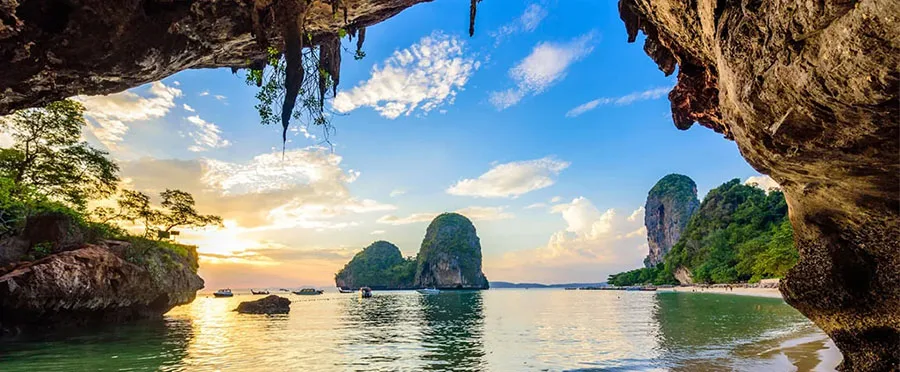
You are staring at glossy photos of towering limestone cliffs and emerald waters, wondering if Krabi is actually a pristine paradise or just an overcrowded, overpriced tourist trap.
But behind the highly edited Instagram filters lies a sprawling southern province that requires a sharp strategy to navigate successfully. Krabi is a major coastal region on southwest Thailand’s Andaman Sea, defined by its massive karst formations, dense mangrove forests, and over 80 offshore islands. It serves as both a chaotic transit hub and a gateway to world-class rock climbing, scuba diving, and island-hopping. Smart budget vacationers and independent explorers use this region as a base, but avoiding the worst tourist traps requires knowing exactly where to step and when to run.
Key Takeaways
- Ao Nang is a transit camp: Use it for cheap food and boat links, not for a pristine beach experience.
- Railay is mainland, not an island: You can only reach this famous rock-climbing peninsula by boat due to the high cliffs cutting it off.
- Watch the monsoons: Southwest monsoon rains batter the coast from May to October, shutting down many remote island boat routes completely.
- Book longtails directly: Avoid hotel booking desks and buy your island-hopping tickets directly from the local Ao Nang Longtail Boat Service club booths.
- Download Grab and Bolt: Local songthaews (passenger trucks) operate on fixed daytime routes, but ride-hailing apps keep private drivers honest.
Quick Facts Block
| Metric | Detail |
| Location | Southwest Coast of Thailand, Andaman Sea |
| Region | Southern Thailand |
| Coordinates | 8.0863° N, 98.9063° E |
| Ao Nang Beach Fee | Free (Public) |
| National Park Fees | 200 – 400 THB per person (Hat Noppharat Thara-Mu Ko Phi Phi) |
| Dress Code | Casual; modest shirts and long pants/skirts required for local temples |
| Best Time of Day | 07:00 – 09:30 for popular viewpoints; 16:30 for Railay sunsets |
| Best Months to Visit | Late November to late March |
| Estimated Duration | 3 to 5 days for a solid regional overview |
| Photography Rules | Drones strictly prohibited in National Parks without prior DNP permits |
Overview and Reality
Krabi historically evolved from a quiet fishing and agricultural community into a global tourism powerhouse over the last three decades. Travelers pour in to see the iconic sheer limestone karsts that shoot straight out of the turquoise sea, a geographical marvel formed over millions of years of rock erosion. The massive surge in global popularity has turned the main beach strips into dense blocks of tailors, massage parlors, and aggressive souvenir vendors.
You need to understand that Krabi is not a single cozy beach town where you walk everywhere. It is a large province where the primary airport, the administrative city, and the actual beach destinations sit miles apart from one another. What this place is NOT is an untouched, hidden island escape. If you arrive expecting an exclusive, quiet slice of wilderness without neon signs or loud longtail engines, you will be deeply disappointed. But if you accept it as a highly functional, jaw-droppingly beautiful launchpad for marine adventure, it delivers massive value.
What to See & Do
Railay Beach and Phra Nang Cave
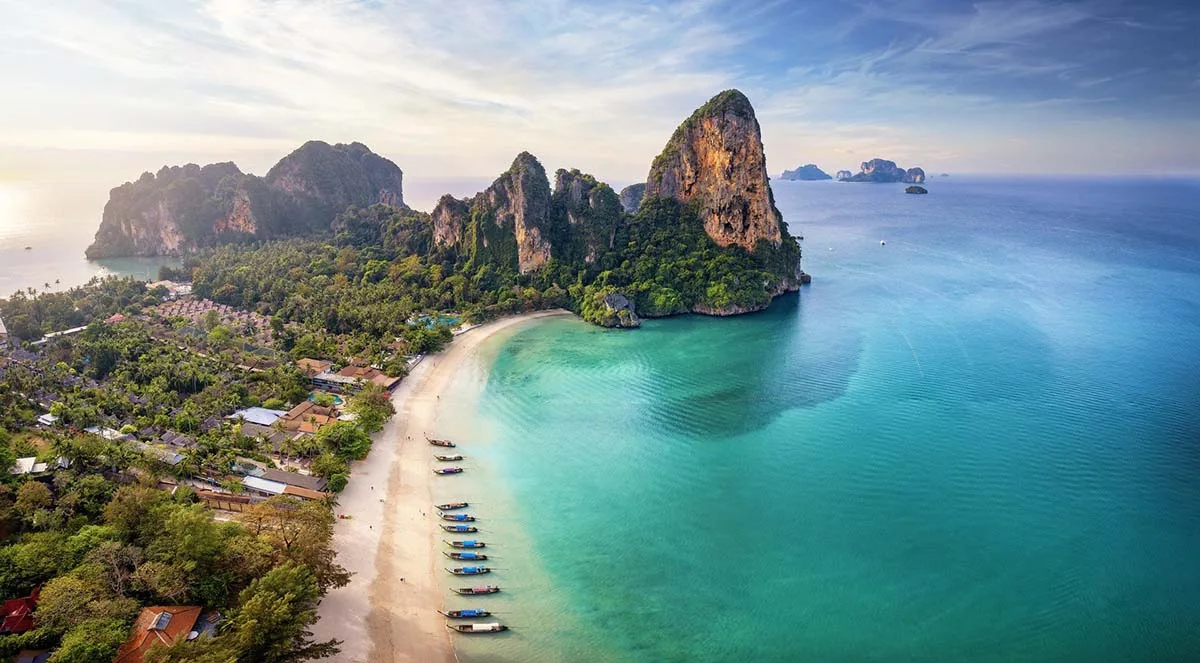
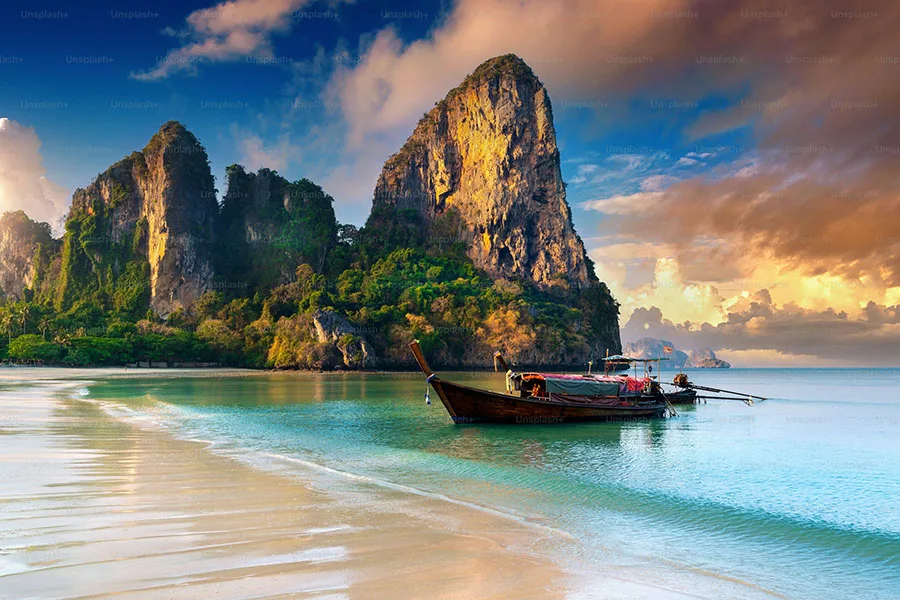
This peninsula is world-famous for its dramatic vertical walls, drawing professional rock climbers from every corner of the globe. You can hike the steep, muddy trail to the Railay Viewpoint or look at the phallic shrines inside Phra Nang Cave. The price of missing out on Railay is spending your holiday stuck on mediocre mainland beaches while the real scenery sits just a ten-minute boat ride away.
Tiger Cave Temple (Wat Tham Suea)
Located inland near Krabi Town, this Buddhist site requires you to climb 1,260 steep, uneven concrete steps to reach a golden Buddha statue perched on a mountain peak. The view offers a panoramic look across the entire province’s karst landscape. Watch your belongings closely because the local macaque monkeys will aggressively steal sunglasses, water bottles, and phones right out of your hands.
The Four Islands Circuit
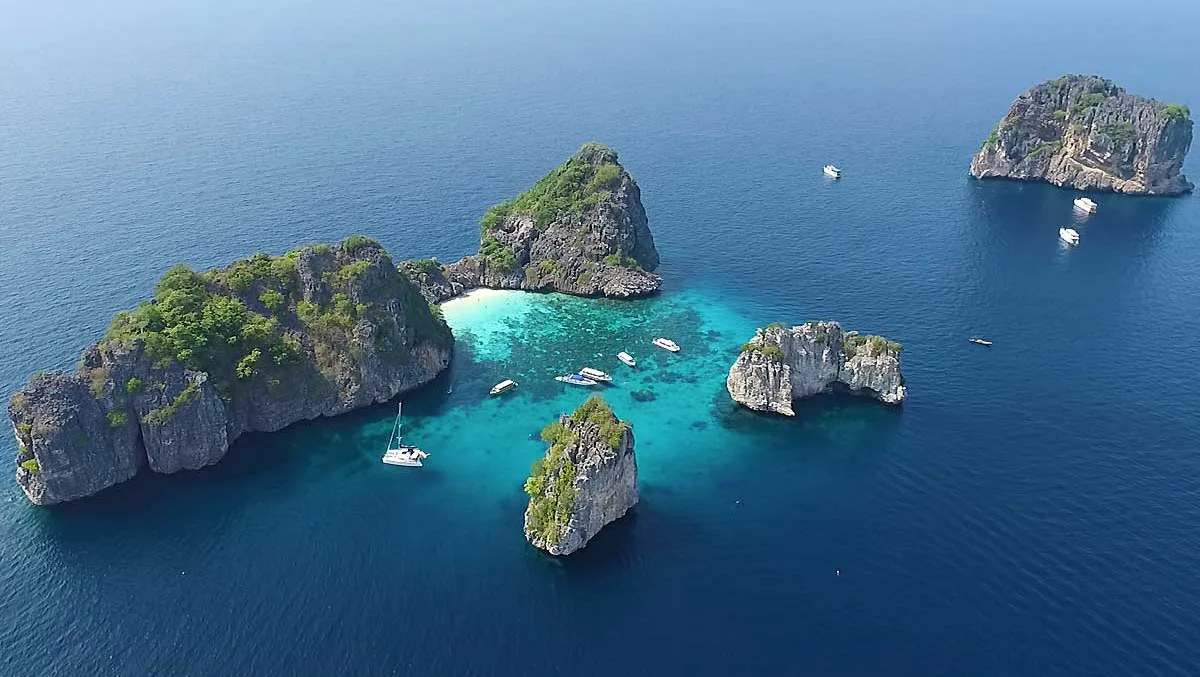
This classic island-hopping day trip covers Koh Poda, Koh Tup, Koh Mor, and Koh Gai (Chicken Island). At low tide, a sandbar emerges connecting Koh Tup and Koh Mor, allowing you to walk between the islands across the ocean floor.
Contrarian Truth: The standard Four Islands group tour is a logistical nightmare of diesel fumes and selfie-stick crowds. Rent a private longtail boat at 07:30 AM for roughly 2,500 THB to beat the massive public tour speedboats by two full hours.
How to Get There
From Bangkok
The absolute fastest route is a domestic flight from either Suvarnabhumi Airport (BKK) or Don Mueang International Airport (DMK) straight into Krabi International Airport (KBV). Flights take roughly 1 hour and 20 minutes, operated daily by carriers like Thai AirAsia, Thai Vietjet Air, and Bangkok Airways. Alternatively, budget travelers can take an overnight bus from Bangkok’s Southern Bus Terminal (Sai Tai Mai), which takes about 12 hours.
From Krabi Airport to the Coast
Once you land at Krabi International Airport, ignore the aggressive airport taxi touts inside the arrivals hall. Walk directly to the official transportation desk to buy a ticket for the shared airport bus, which costs about 150 THB per person to Ao Nang. A private air-conditioned taxi to Ao Nang costs a flat rate of 600 to 800 THB, taking approximately 30 to 45 minutes depending on traffic.
Local Transport Options
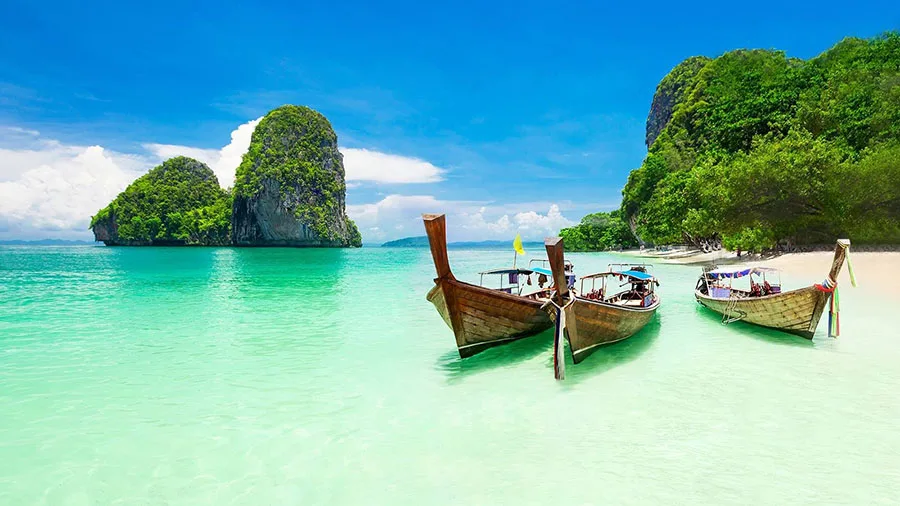
- Longtail Boats: The standard marine taxi system. Fixed prices apply from Ao Nang beach to Railay (100 THB per person one-way during daylight).
- Songthaews: These white passenger pickup trucks run from Krabi Town to Ao Nang every 10-15 minutes during the day for 50-60 THB.
- Ride-Hailing Apps: Both Grab and Bolt operate efficiently in the Ao Nang and Krabi Town areas, providing transparent pricing before you step inside the car.
Best Time to Visit
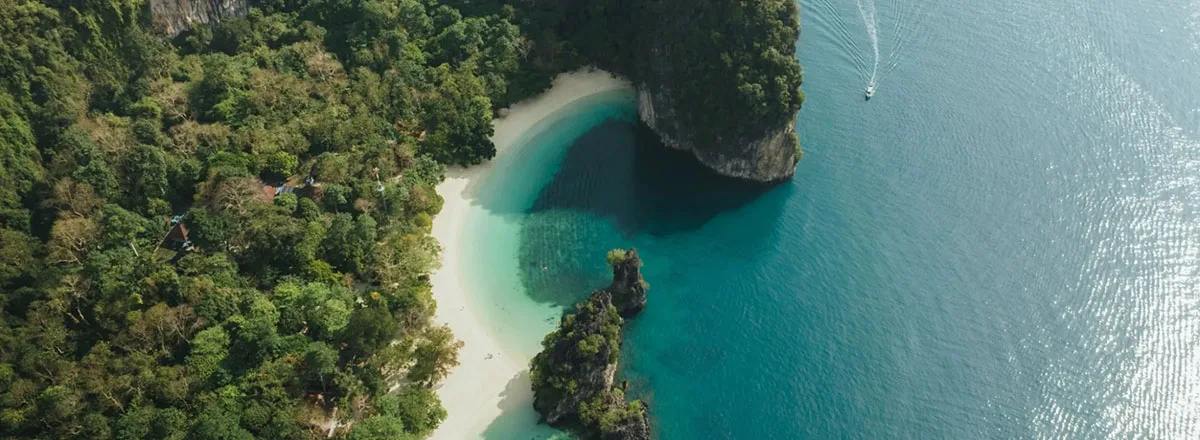
The local climate is dictated by the tropical monsoon cycle, creating two distinct seasons that completely change the travel experience on the ground.
The peak dry window runs from December through February, offering completely flat seas and clear blue skies. However, accommodation prices skyrocket by 50% to 100% during this timeframe, and popular beaches get packed shoulder-to-shoulder. March and April bring intense, humid heat where daily temperatures consistently breach 35°C (95°F).
Visiting during the shoulder months of late November or early April strikes the best balance for independent travelers. You will catch excellent weather while dodging the massive tour bus crowds and peak accommodation surcharges. The wet season from May to October brings heavy southwest monsoon winds, making boat trips to outer islands highly volatile and sometimes dangerous.
Costs & Budget
Navigating Krabi without overpaying means understanding the massive price gap between inland Krabi Town and the coastal tourist zones.
Estimated Price Breakdown
| Expense Category | Budget Range (Daily / Per Item) | Real-World Context |
| Hostel / Budget Bed | 300 – 600 THB | Clean dorm or basic fan room back from the beach |
| Mid-Range Hotel | 1,200 – 3,000 THB | 3-star resort with a pool in Ao Nang or Railay |
| Local Street Food | 50 – 100 THB | Pad Thai or Fried Rice at Krabi Town Night Market |
| Tourist Restaurant Meal | 250 – 600 THB | Western food or fresh seafood on the Ao Nang beachfront |
| Private Longtail Rental | 2,500 – 3,500 THB | Full-day private hire for island hopping (up to 4 people) |
| Scooter Rental | 200 – 300 THB | 125cc scooter (excludes fuel, requires international license) |
Tips & Etiquette
Island Scam Awareness
Be highly skeptical of Tuk-Tuk drivers or random boat captains who tell you a specific beach, national park, or temple is “closed today for a holiday.” This is almost always a lie designed to redirect you to an expensive, commission-paying souvenir shop or a private travel agency. Always walk directly to the official park ticket booths to check the real operating status yourself.
Cultural and Environmental Respect
- Dress Modestly at Temples: Never wear swimwear, sleeveless shirts, or short shorts inside sacred sites like Wat Tham Suea. Cover your shoulders and knees.
- Step Over Thresholds: When entering traditional wooden buildings or temple main halls, never step directly on the raised wooden doorsill; step completely over it.
- Protect the Reefs: Thailand strictly bans the touching of coral, feeding marine life, or using non-reef-safe sunscreens inside national marine parks. Fines are heavy and actively enforced.
Nearby Places & Alternatives
Phang Nga Bay
Located roughly 80 kilometers northwest of Krabi, this protected bay features spectacular sheer limestone islands rising vertically out of calm, emerald-green waters. It is home to the famous James Bond Island and the stilted floating fishing village of Koh Panyee. This trip is perfect for sea kayakers looking for completely calm waters protected from heavy ocean waves.
Koh Lanta
Sitting about 70 kilometers south of Krabi Town, this massive island offers a drastically slower, quieter pace of life. Connected to the mainland via a short car ferry, Koh Lanta features wide, flat sandy beaches that stretch for miles without the aggressive beach vendors found further north. Go here if you want an independent scooter-exploration vibe over dramatic rock climbing.
Summary / Key Takeaways
- Geography dictates logistics: Remember that Krabi is a massive mainland province with islands scattered across the Andaman Sea, not an isolated beach commune.
- Beat the crowd curves: Hire private longtail boats early in the morning to enjoy popular sites like Railay and Koh Poda before the tour boats arrive.
- Budget smartly: Stay in Krabi Town or the back roads of Ao Nang to cut food and accommodation costs by half while keeping quick access to the water.
- Respect local rules: Keep your shoulders covered at Wat Tham Suea, leave the marine life completely alone, and always pay park entry fees at official booths.