Short Summary
Sukhothai represents the dawn of Thai architecture and identity, yet many travelers skip it or treat it as an exhausting quick stopover. Renting a simple bicycle at sunrise lets you glide through ruined temples, lotus ponds, and brick stupas before tour buses arrive. This guide is built for smart budget vacationers and independent explorers wanting the practical reality of northern heritage logistics.
Key Takeaways
- Sukhothai Historical Park is divided into five distinct zones; the Central Zone holds the highest concentration of restored temples.
- Renting a bicycle for 50 THB per day at the park entrance is the most efficient and enjoyable way to navigate the flat site grounds.
- Staying in Old Town (Mueang Kao) puts you minutes from the ruins, whereas staying in New Town requires a 12-kilometer songthaew commute.
- Wat Si Chum houses the massive 15-meter-high seated Buddha (Phra Achana), located in the North Zone, which requires a separate entry ticket.
- Sukhothai experiences extreme afternoon heat between March and May; early morning exploration from 06:30 to 10:00 is essential.
- Direct flights into Sukhothai Airport (THS) via Bangkok Airways are convenient but cost significantly more than train or bus routes via Phitsanulok.
Quick Facts Block
- Location: Sukhothai Province, Lower Northern Thailand
- Region: Southeast Asia
- Coordinates: 17.0169° N, 99.7036° E
- Opening Hours: Daily 06:30 – 19:30 (Ticket booths close around 18:00; tram/lighting hours vary)
- Entrance Fee: 100 THB for Central Zone + 10 THB bicycle fee (Separate 100 THB tickets required for North and West zones)
- Dress Code: Covered shoulders and knees required; modest footwear easy to slide off at active shrines
- Best Time of Day to Explore: 06:30 to 09:30 for morning mist and cool weather, or 16:30 to 18:30 for sunset photography
- Best Months to Visit: November through February for lower humidity and pleasant cycling temperatures
- Estimated Visit Duration: 1 to 2 days for full multi-zone exploration
- Photography Rules: Respect local worshipers; never climb on ancient brick ruins or sit on sacred Buddha pedestals
Overview
Deciding how to fit ancient heritage into a tight Thailand itinerary often causes serious planning stress. You look at maps, compare long travel hours from Chiang Mai, and wonder if visiting ancient ruins is worth breaking up your route. The truth on the ground is that Sukhothai delivers a far more peaceful, spacious, and atmospheric experience than the crowded urban ruins of Ayutthaya.
Founded in the 13th century as the first capital of Siam, Sukhothai established the classic “Sukhothai style” of Thai art-characterized by graceful walking Buddhas, bell-shaped chedis, and intricate lotus-bud spires. The UNESCO World Heritage site is carefully manicured, featuring calm water moats, mature trees, and wide asphalt bicycle paths.
Travelers who base themselves right in Old Town get to enter the central gates right as they open at 06:30. Riding a bicycle past Wat Mahathat as the morning sun hits the giant stone pillars lets you experience ancient history without tourist crowds. Understanding local transit connections keeps your journey smooth while preserving your daily travel budget.
What This Is NOT
This guide is not a dry academic history lecture or a push to book overpriced guided bus tours. It is not theoretical travel advice pulled from generic tour operator brochures.
Sukhothai is not a walkable single-building site where you can just stroll around for thirty minutes on foot. The historical park spans over 70 square kilometers across multiple outer zones. Expecting to see everything on foot under the blazing midday sun will leave you dehydrated and exhausted.
What to See & Do
Wat Mahathat (Central Zone)
The massive spiritual heart of the ancient kingdom. It features a main lotus-bud chedi flanked by two towering 9-meter standing Buddha statues (Phra Attharot) enclosed in brick niches. The outer moat mirrors the stone stupas perfectly during early morning hours, making it the top photography spot on the grounds.
Wat Si Chum (North Zone)
Located roughly 2 kilometers north of the central park wall, this temple houses the famous Phra Achana-a gigantic seated Buddha statue squeezing through a narrow open-roofed mondop brick building. The scale of the hand covered in gold leaf at eye level is unforgettable.
Wat Sa Si (Central Zone)
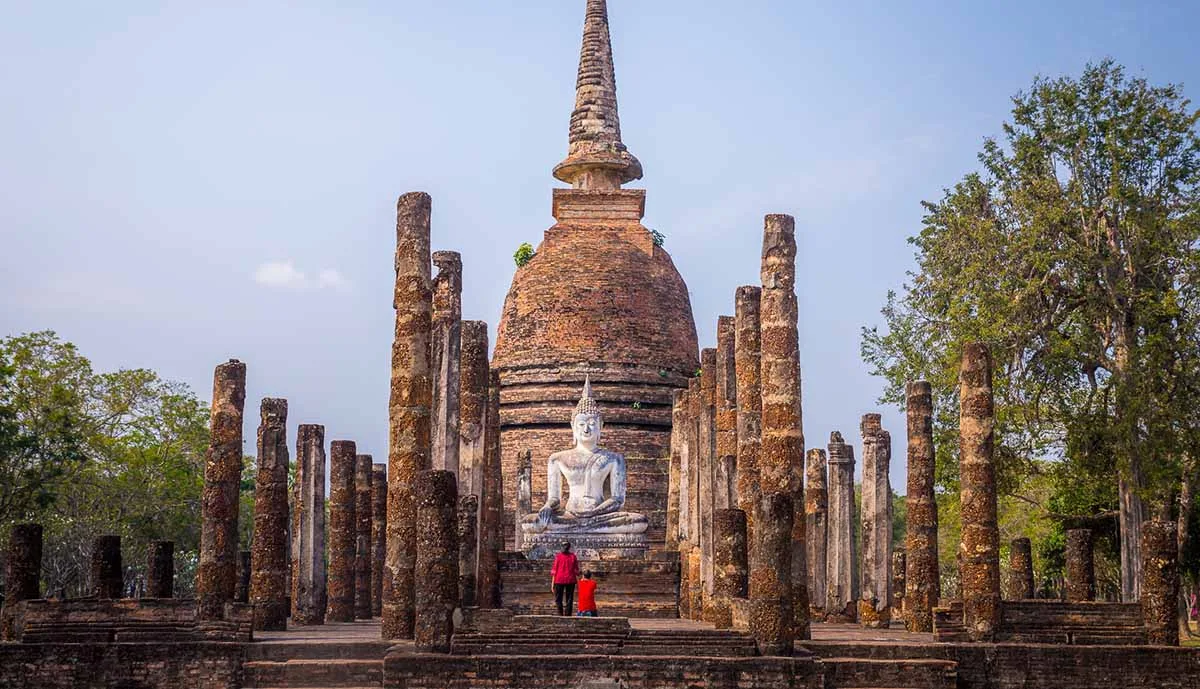
A stunning classic temple sitting in the middle of a lotus-filled lake, accessible via a small wooden bridge. Its bell-shaped Ceylonese-style chedi stands directly behind a walking Buddha statue, creating an iconic sunset silhouette.
The Price of Missing Out
Skipping Sukhothai or rushing through it on a 2-hour bus stop means missing Thailand’s most serene historical landscape. You spend your trip seeing only modern city noise without ever experiencing the calm, green open spaces of the northern plains.
You also miss out on riding through the quiet West Zone ruins like Wat Saphan Hin, perched up on a forested hill overlooking the entire valley. Skipping an overnight stay means trading cool morning bicycle rides for hot afternoon crowds.
How to Get There & Transit Realities
Reaching Sukhothai requires choosing between direct boutique flights or overland bus and train transfers.
| Route | Primary Transport | Travel Time | Logistics Realities |
| BKK to Sukhothai | Flight (BKK->THS) | 1 hour 15 mins | Higher cost; limited |
| BKK to Phitsanulok | Express Train/Air | 4.5 to 6 hours | Budget-friendly choice |
| Phitsanulok->Sukh. | Local Bus / Van | 1 hour | Departs hourly |
| Chiang Mai->Sukh. | Direct Express Bus | 4.5 to 5.5 hours | Scenic highway route |
- From Bangkok: Flying directly into Sukhothai Airport (THS) via Bangkok Airways is the fastest option. Alternatively, take an express train or low-cost flight to nearby Phitsanulok, then hop on a local bus directly to Sukhothai bus terminal.
- From Chiang Mai: Express buses operate regularly from Chiang Mai’s Arcade Bus Terminal. The highway route winds down through Phrae and Lampang, dropping you directly at the Sukhothai Bus Station.
Best Time to Visit: Weather & Seasonality
Northern weather patterns determine how comfortable your daily cycling trips will be.
- November to February (Cool Season): The prime window for cycling. Mornings are crisp and cool (around 18°C – 22°C), daytime skies stay clear, and humidity remains low.
- March to May (Hot Season): Temperatures regularly climb past 38°C. Sightseeing must be confined strictly to early mornings and late afternoons to avoid heat illness.
- June to October (Monsoon Season): The landscape turns bright green and lotus ponds fill up. Rain usually falls in short afternoon bursts, keeping crowd numbers very low and hotel prices cheap.
Costs & Budget Guidelines
Sukhothai is one of the most affordable destination stops in northern Thailand.
- Accommodation: Character-filled guesthouses and resort hotels in Old Town run 600 THB to 1,500 THB ($17 – $42 USD) per night. Budget guesthouses start under 400 THB ($11 USD).
- Food: Local street food (Sukhothai Noodles with crispy pork and ground peanuts) costs 40 THB to 70 THB ($1.10 – $2.00 USD) per bowl. Sit-down meals range from 150 THB to 300 THB ($4 – $9 USD).
- Bicycle Rental: 50 THB ($1.40 USD) per day at shops right outside the Central Zone entrance. Electric bicycles and golf carts are also available at higher rates.
- Park Fees: 100 THB per major zone, plus 10 THB for a bicycle entry pass.
Tips, Etiquette & Uncomfortable Truths
One raw travel truth: New Town Sukhothai has very little historical charm. It is a modern commercial town situated 12 kilometers away from the historical park. If you stay in New Town to save a few baht, you will spend your morning commuting back and forth on noisy blue songthaews instead of cycling through ruins.
- Book your hotel in Old Town (Mueang Kao) within walking distance of the historical park entrance.
- Try a local bowl of authentic Sukhothai Noodles (Kuay Teow Sukhothai), served with green beans, crushed peanuts, and lime.
- Bring a refillable water bottle; cycling between zones under the tropical sun drains your hydration fast.
- Wear shoes that slip off easily, as several active shrine zones around the Buddha statues require removing footwear.
Nearby Places & Alternatives
- Si Satchanalai Historical Park: Located 55 kilometers north, offering wilder, un-restored temple ruins set inside a dense forest with zero crowds.
- Kamphaeng Phet Historical Park: Located 80 kilometers south, forming part of the shared UNESCO triad with impressive ancient wall fortifications.
- Phitsanulok: A major regional transport hub 50 kilometers east, home to the revered Wat Phra Si Rattana Mahathat (Wat Yai).
Summary / Key Takeaways
Visiting Sukhothai Historical Park offers a peaceful, atmospheric journey into Thailand’s early history if you base yourself correctly. Stay in Old Town, rent a 50 THB bicycle at 06:30, and explore the central ruins before the sun gets heavy. Make sure to head out to Wat Si Chum in the North Zone to stand before the giant seated Buddha, and sample local Sukhothai noodles at a roadside stall before heading off to your next stop.
Frequently Asked Questions
Stay in Old Town (Mueang Kao) because it puts you within walking or cycling distance of the historical park entrance, saving you daily commute times.
Take a blue local open-air bus (songthaew) from the main street in New Town; it costs around 30 THB and takes about 20-25 minutes.
You can walk the Central Zone easily, but renting a bicycle or hiring a tuk-tuk is recommended to comfortably reach the North and West zones.
One full day is sufficient to see the major zones, but spending two nights allows for a far more relaxed pace and early morning sunrise visits.
Sukhothai features more open green park space, lower crowds, and distinct bell-shaped stupas, whereas Ayutthaya is integrated directly into a modern city grid with tower-like prangs.