
If You’ve Ever Wondered “Why Orange?”…
You’re not alone.
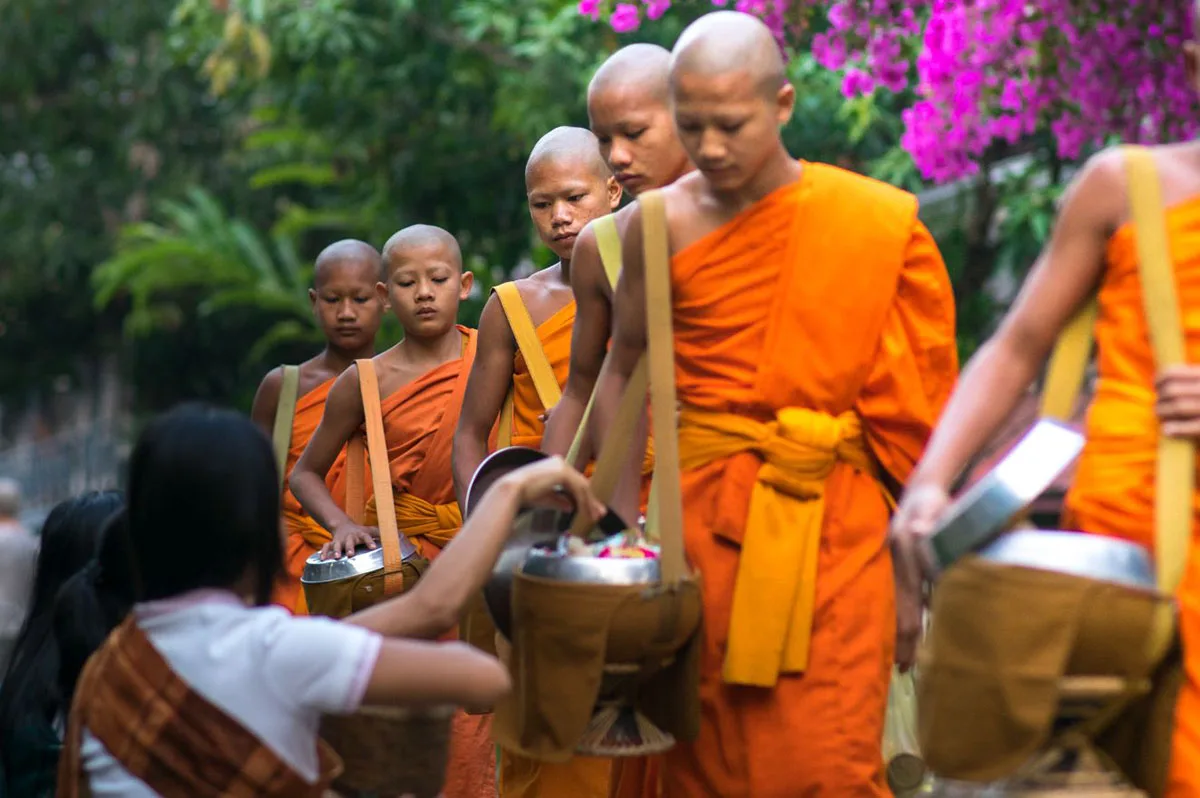
Every visitor to Thailand eventually asks the same question after spotting rows of serene monks wrapped in glowing orange robes during morning alms rounds. Why orange — and not white, brown, or black?
- 1If You’ve Ever Wondered “Why Orange?”…
- 2From Forest Cloth to Sacred Robes
- 3The Symbolism Behind the Orange Hue
- 4Theravāda vs. Mahāyāna: The Color Spectrum
- 5Different Shades Tell Different Stories
- 6How the Robe Is Made and Worn
- 7Modern Robes: Tradition Meets Convenience
- 8Funny Fact
- 9Lesser-Known Fact
- 10Conclusion: A Living Flame of Simplicity
- 11Call to Readers
It’s a story that reaches back more than 2,500 years, blending symbolism, simplicity, and a bit of natural dye chemistry. Let’s unwrap the meaning behind one of Buddhism’s most recognizable images.
From Forest Cloth to Sacred Robes
When the Buddha founded the monastic community (the Sangha), his monks were told to live simply — relying on what others discarded.
Their robes, called “cīvara” or “kasaya”, were originally made from rags collected from rubbish heaps, cremation grounds, or roadsides.
These scraps were stitched together, washed, and dyed to a uniform color — usually ochre, brown, or orange — using natural plant materials like:
Saffron
Turmeric
Jackfruit wood
Bark and roots
The goal was practicality, not fashion. The color helped hide stains and symbolized detachment from worldly desires.
Read more about Life of Theravāda Monks in Thailand
The Symbolism Behind the Orange Hue
Over time, the orange-saffron tone gained deep symbolic meaning.
Simplicity: Monks wear humble robes to reject materialism.
Purity: The color recalls the fire of enlightenment, which burns away ignorance.
Renunciation: Orange represents spiritual focus over physical comfort.
Unity: The robe visually identifies members of the monastic community across regions.
For many Thais, the robe is not just clothing — it’s a living symbol of the Buddhist path.
:earn more about Tak Bat: Sacred Buddhist Almsgiving Ceremony
Theravāda vs. Mahāyāna: The Color Spectrum
While Theravāda monks in Thailand, Myanmar, Laos, and Sri Lanka favor orange or saffron, other Buddhist traditions use different tones:
| Region / Tradition | Typical Robe Color | Notes |
|---|---|---|
| Thailand, Myanmar, Sri Lanka (Theravāda) | Orange / Saffron | Represents purity and simplicity |
| Tibet (Vajrayāna) | Maroon / Red | Symbolizes strength and transformation |
| China, Korea, Japan (Mahāyāna) | Brown, Gray, or Black | Emphasizes discipline and humility |
This variety shows how local culture and available dye sources influence Buddhist attire — while the spirit behind it stays the same.
Read more about The Role of Theravada Buddhism in Thai Culture
Different Shades Tell Different Stories
In Thailand, you’ll notice robes ranging from bright tangerine to deep burnt orange.
That’s not random — the tone often depends on:
The region (north, south, or Isaan)
The monastery’s tradition (city vs. forest monks)
The dye ingredients
Exposure to sunlight over time
How the Robe Is Made and Worn
A complete monk’s robe typically includes three pieces:
Antarvāsa – the inner garment covering the lower body
Uttarāsaṅga – the main robe wrapped around the torso
Saṅghāti – an outer robe or additional layer for ceremonies or cold weather
Every fold and stitch follows traditions described in the Vinaya Pitaka, the ancient Buddhist monastic code.
Modern Robes: Tradition Meets Convenience
Today, most robes are factory-made cotton or polyester blends, yet they maintain the same symbolic structure and color.
Monks still dye their robes manually in some monasteries, especially in rural areas, to preserve the old ways.
Interestingly, many monks in Thailand receive their robes as donations during Kathin ceremonies, an annual merit-making event where laypeople present new robes to the Sangha.
Funny Fact
In early times, some monks used dirt, ash, or even rust water to achieve the orange tone — not exactly a high-end dye process! You could say Buddhist fashion started in the eco-friendly recycling trend centuries before it became cool.
Lesser-Known Fact
The robe’s patchwork pattern was designed to mimic rice fields viewed from above — a tribute to the agrarian life that sustained early monastic communities. Few visitors realize that every monk carries that landscape with him daily.
[ufaqsw id=3188]
Conclusion: A Living Flame of Simplicity
The orange robe is more than cloth — it’s a living reminder of impermanence and mindfulness.
In every thread lies a story of humility, renunciation, and a 2,500-year-old promise to walk the middle path.
So the next time you see monks gliding through Thai streets in glowing saffron robes, remember: that simple color carries centuries of wisdom, devotion, and calm.
Call to Readers
Have you seen monks in different parts of Thailand wearing different robe colors?
Share your thoughts or photos in the comments — we’d love to see how you’ve experienced this vivid part of Thai culture!
You Might Also Like
Exploring Thailand in Two Weeks – Is it Possible?
Exploring Thailand in Two Weeks: From Lazy Beaches to Adventurous Journeys Is it possible to explore Thailand in…
Thailand vs Malaysia
Two incredible neighbors. Two very different travel vibes. Which one fits your journey? Let’s break it down.📋 Table…
The Story Behind Thailand’s Most Famous Festivals
Why Thailand’s Festivals Are Next-Level Insane (In the Best Way) If you think your local street fair with…