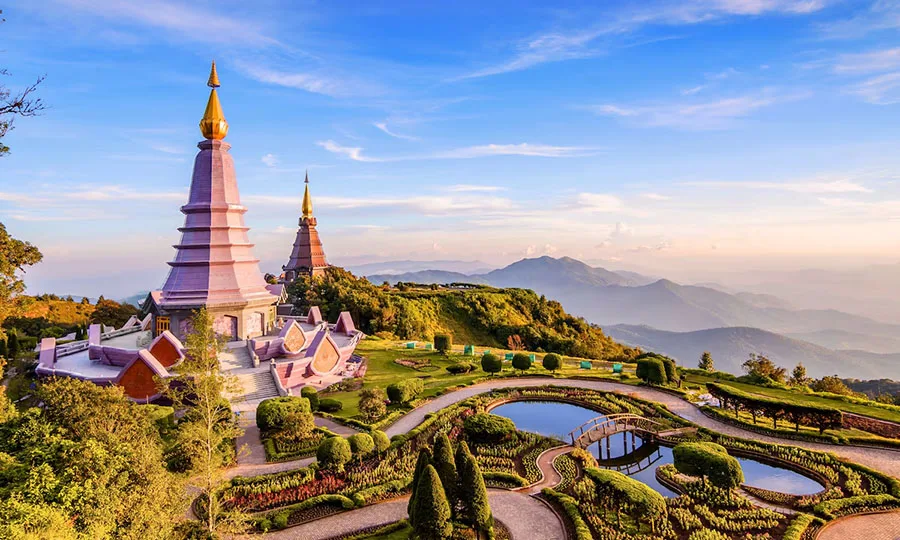

Standing on the summit of Doi Inthanon in a lightweight hoody while watching your breath condense in the morning mist completely shatters every tropical myth you have about northern Thailand. Most first-time travelers arrive expecting a quick photo op, only to get caught in massive parking gridlocks or frozen in tropical resort wear.
- 1Key Takeaways
- 2Quick Facts Block
- 3Overview & Introduction
- 4What to See & Do
- 51. The Twin Royal Pagodas
- 62. Kew Mae Pan Nature Trail
- 73. Ang Ka Nature Trail
- 84. Iconic Waterfalls
- 9What This Place Is NOT
- 10How to Get There
- 11From Chiang Mai Old City
- 12Best Time to Visit
- 13Costs & Budget
- 14The Price of Missing Out
- 15Tips & Etiquette
- 16Nearby Places & Alternatives
- 17Summary / Key Takeaways
- 18Ready to Plan Your Peak Trip?
- 19Frequently Asked Questions
- 20What is Doi Inthanon famous for?+
- 21Can you drive all the way to the top of Doi Inthanon?+
- 22Is Doi Inthanon worth visiting?+
- 23When is the best time to visit Doi Inthanon?+
- 24How much does it cost to enter Doi Inthanon National Park?+
- 25Does it ever snow on Doi Inthanon?+
Doi Inthanon is Thailand’s highest mountain, towering 2,565 meters above sea level in the Thanon Thong Chai Range. Located in Doi Inthanon National Park in Chom Thong District, Chiang Mai Province, this 482-square-kilometer reserve protects rare mossy cloud forests, crucial watersheds, and significant avian habitats. It serves as a vital ecological and cultural refuge for travelers seeking cooler climates, dramatic waterfalls, and historic royal monuments.
Key Takeaways
- Peak Altitude: 2,565 meters above sea level, making it the highest point in Thailand.
- Travel Distance: Roughly 70 to 90 kilometers southwest of Chiang Mai Old City, taking 1.5 to 2 hours by road.
- National Park Entrance Fees: Foreign adults pay 300 THB; foreign children pay 150 THB.
- Royal Pagodas Cost: An additional 100 THB entry fee per person applies at the gate.
- Kew Mae Pan Closure: The primary ridge trail is strictly closed annually from June 1 to October 31 for forest recovery.
- Temperature Realities: Winter mornings (Nov-Feb) routinely drop between 5°C and 12°C.
Quick Facts Block
| Category | Details |
| Location | Chom Thong District, Chiang Mai Province, Northern Thailand |
| Coordinates | 18.5889° N, 98.4864° E |
| Opening Hours | Main Park Gates: 05:00 – 18:00 daily |
| Entrance Fee | Foreigners: 300 THB (Adult), 150 THB (Child) | Thai Nationals: 50 THB (Adult), 20 THB (Child) |
| Dress Code | Shoulders and knees covered for Royal Pagodas; warm layers and closed-toe shoes for trails |
| Best Time of Day | 05:30 to 09:30 (for sunrise, fog clearing, and minimal crowd traffic) |
| Best Months | November to February (cool, dry season with minimal rainfall) |
| Visit Duration | 6 to 8 hours (full-day trip from Chiang Mai city) |
| Photography | Handheld cameras permitted throughout; commercial drone usage requires pre-approved NBTC/CAAT permits |
Overview & Introduction
Formerly known as Doi Luang (meaning “Big Mountain”), the peak was renamed in honor of King Inthawichayanon, one of the final rulers of Chiang Mai. He recognized the mountain’s essential role in feeding the Mae Ping River basin and ordered his remains placed at the summit after his death in 1897. Today, his memorial shrine sits near the peak, surrounded by ancient cloud forest vegetation.
Travelers head here to experience an ecological shift impossible to find in Thailand’s lowlands. The reserve shelters over 360 bird species, lush sphagnum moss bogs, and unique mountain flora that thrive in year-round high humidity. It provides an immediate antidote to Chiang Mai’s summer heat waves, offering genuine mountain air and dense canopy trails.
You cannot treat Doi Inthanon like a standard roadside photo spot if you want to enjoy it. Packing improperly leads to shivering through sunrise, while arriving late puts you in bumper-to-bumper traffic along Highway 1009. Understanding the terrain, logistics, and local rules is essential for a smooth journey.
What to See & Do
1. The Twin Royal Pagodas
Phra Mahathat Naphamethanidon and Naphaphonphumisiri were constructed by the Royal Thai Air Force to commemorate the 60th birthdays of King Bhumibol Adulyadej (Rama IX) and Queen Sirikit. The sites offer landscaped flower gardens, detailed stone reliefs, and sweeping panoramic views across the mist-filled valley. Escalators assist visitors moving up the steep stone terraces to the main shrines.
- Entrance Fee: 100 THB per person.
- Dress Code: Covered knees and shoulders mandatory.
2. Kew Mae Pan Nature Trail
This 2.5-kilometer loop trail provides the most dramatic scenery in northern Thailand. It leads hikers through dense cloud forest, along a razor-sharp mountain ridge, and out to open panoramic viewpoints.
- Trail Fee: 200 THB per group (includes a mandatory Hmong community guide).
- Seasonal Closure: Closed strictly from June 1 through October 31 annually.
3. Ang Ka Nature Trail
Located near the summit, this short 360-meter boardwalk loop passes through a high-altitude sphagnum moss forest. The constant fog and damp wood create a mystical environment unlike any other trail in Thailand.
- Duration: 15-20 minutes.
- Accessibility: Flat boardwalk, suitable for all fitness levels.
4. Iconic Waterfalls
- Wachirathan Waterfall: A massive, roaring cascade dropping 80 meters over granite cliffs. Heavy mist saturates the viewing decks, creating constant photo-ready rainbows.
- Siriphum Waterfall: A dramatic twin-tiered waterfall visible from the main road, framed by royal botanical garden grounds.
- Mae Ya Waterfall: Located in the southern sector of the park, this tiered cascade tumbles down 260 meters of stone steps. It requires a separate 15-minute drive off Highway 108, but offers fewer crowds.
What This Place Is NOT
- It is NOT a backcountry wilderness expedition. The summit features paved roads, broad boardwalks, parking spaces, and basic food stalls.
- It is NOT a year-round snowy peak. Frost (Mae Kha Ning) occasionally covers grass patches on cold January mornings, but it never snows.
- It is NOT a quick 2-hour activity. Driving from Chiang Mai city takes up to 2 hours each way, so budget a full day.
How to Get There
From Chiang Mai Old City
- Private Driver / Taxi: Renting an SUV or private van via local providers or ride-hailing platforms (like Grab or Bolt for outbound trips) costs between 2,200 THB and 3,200 THB for a full day. This option offers complete control over your schedule and sunrise timing.
- Rental Car: Renting a vehicle in Chiang Mai costs around 800-1,500 THB per day. Route 108 south to Chom Thong transitions into Highway 1009, a well-paved mountain road with steep climbs and sharp hairpin turns.
- Group Tour Vans: Shared day tours cost 1,200 to 1,800 THB per person, covering park entrance fees, lunch, and direct hotel pickup. These tours follow fixed schedules, which means arriving at peak viewpoints alongside other groups.
- Public Songthaew (Yellow Truck): Take a yellow songthaew from Chiang Mai’s Pratu Chiang Mai Gate to Chom Thong Temple (approx. 50 THB). From there, charter a local mountain songthaew up to the park summit (1,000–1,500 THB round trip).
Best Time to Visit
| Season | Temp Range | Weather Conditions | Crowd Levels |
| Nov – Feb (Cool) | 5°C to 15°C | Crisp, dry, foggy | Heavy (Peak season) |
| Mar – May (Warm) | 12°C to 25°C | Clear, smoky haze | Moderate |
| Jun – Oct (Rain) | 10°C to 20°C | Heavy rains, mist | Low (Trails close) |
The optimal window runs from November through February. Temperatures at the summit drop to single digits early in the morning, producing clear skies above the clouds.
The rainy season (June to October) brings heavy monsoons that keep the waterfalls roaring, but fog often obscures the viewpoints. Additionally, key paths like the Kew Mae Pan trail close to prevent erosion.
Costs & Budget
Planning your expenses helps avoid surprises at park checkpoints. Ensure you bring enough cash, as mobile network coverage can be unreliable in deep valleys.
- Park Gate Entry: 300 THB (Foreign Adult), 150 THB (Foreign Child).
- Vehicle Fees: 30 THB per car, 20 THB per motorbike.
- Royal Pagodas Entrance: 100 THB per person.
- Kew Mae Pan Local Guide: 200 THB per group.
- Food & Drinks: 50–100 THB per meal at summit stalls (offering hot noodle soups, steamed corn, and local coffee).
The Price of Missing Out
Skipping an early departure means sacrificing the sunrise and getting stuck in heavy traffic. Leaving Chiang Mai after 07:00 places you behind large tour buses on Highway 1009.
By late morning, mist covers the open valleys, hiding the mountain views from the Royal Pagodas. Arriving early grants you clear blue skies above the cloud layer and quiet, peaceful trail walks.
Tips & Etiquette
- Dress in Layers: Wear a warm jacket, long pants, and closed-toe walking shoes. Temperatures at the summit are often 15°C cooler than down in Chiang Mai city.
- Respect Sacred Sites: The Royal Pagodas and King Inthawichayanon Shrine are active places of worship. Keep your voice down, remove hats inside shrines, and dress modestly.
- Check Your Brakes: If you drive a rental vehicle, use low gears (Engine Braking) when descending. Overheated brakes are a common hazard on steep mountain roads.
- Bring Cash: Entrance booths, local Hmong guides, and mountain coffee stalls rarely take credit cards or digital payments.
- Explore Beyond the Main Peak: For an updated list of hidden waterfalls, regional travel updates, and tailored northern Thailand routes, check out our Doi Inthanon Destination Hub.
Nearby Places & Alternatives
- Pha Chor Canyon: Located in Mae Wang National Park (approx. 45 km north of Chom Thong). Features 30-meter high eroded clay cliffs and rock pillars, making it a great stop on your drive back to the city.
- Mae Klang Luang Village: A local Karen hilltribe village situated inside Doi Inthanon National Park. Famous for its terraced rice paddies, fresh drip coffee, and homestay options.
- Wat Phra That Si Chom Thong: An ancient 15th-century temple in Chom Thong district housing sacred relics. Ideal for travelers interested in classical Lanna architecture.
Summary / Key Takeaways
- The Top Peak: Doi Inthanon is Thailand’s highest summit at 2,565 meters above sea level.
- Cold Mornings: Bring warm clothing, as temperatures regularly drop to 5°C between November and February.
- Timing Matters: Leave Chiang Mai by 05:00 to beat tour groups and catch clear morning skies.
- Budget Breakdown: Expect total fees of around 600 THB per person (including park entry, pagodas, and hiking guides).
- Trail Closures: Kew Mae Pan is closed from June 1 to October 31 for seasonal forest recovery.
Ready to Plan Your Peak Trip?
Don’t let cold morning winds or unexpected trail closures ruin your mountain getaway. Pack warm layers, set an early alarm, and explore our full collection of northern travel guides to plan your ultimate trip.
Frequently Asked Questions
Doi Inthanon is famous for being Thailand’s highest peak at 2,565 meters. It features cool mountain weather, high-altitude cloud forests, dramatic waterfalls, and the Twin Royal Pagodas.
Yes, a fully paved road (Highway 1009) leads right up to the summit parking area. You only need to walk a short distance along paved paths to reach the actual highest point marker.
Yes, it offers a distinct climate, rare plant species, and mountain scenery you won’t find anywhere else in tropical Thailand.
The best months are November through February for dry weather, clear views, and cold temperatures.
National park entry costs 300 THB for foreign adults and 150 THB for foreign children. Visiting the Twin Royal Pagodas costs an extra 100 THB per person.
No, it does not snow. However, morning frost (Mae Kha Ning) frequently forms on grass blades during cold January mornings when temperatures drop toward 0°C.
You Might Also Like
Andaman Coast Weather – Best Times & Hidden Gems
If Thailand had a “most dramatic coastline” award, the Andaman Sea would take it without even trying. Think…
15 Must-Do Things in Thailand in 2025
Thailand is a traveler’s dream – golden temples, paradise beaches, mind-blowing food, and adventure at every corner. Whether…
The Best National Parks in Thailand for Adventure Seekers
Thailand isn’t just about bustling cities and idyllic beaches. It’s also a paradise for adventure seekers, with national…