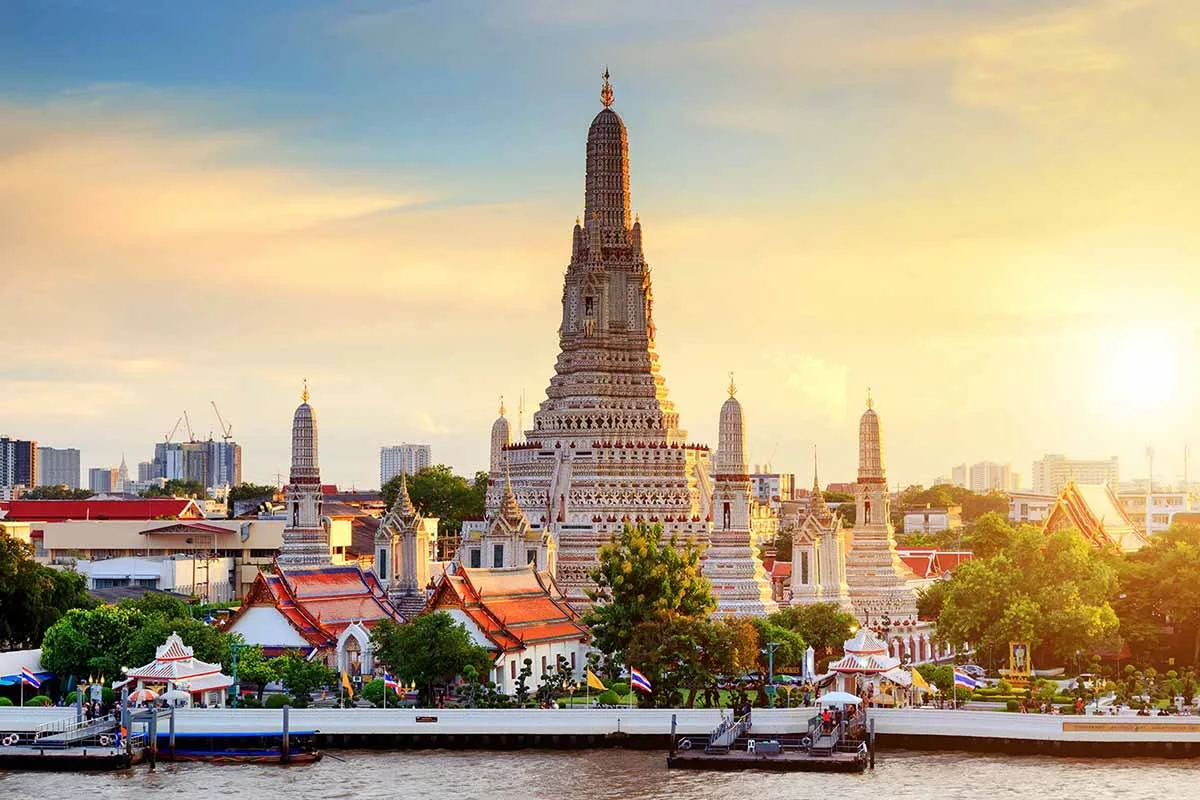

This guide covers Wat Arun, the Temple of Dawn, in Bangkok. For the nearby Grand Palace and Wat Phra Kaew, read the Grand Palace guide.
- 1Key Takeaways (Read These First)
- 2Quick Facts
- 3What is Wat Arun? A Clear Definition
- 4The Architecture: What You Are Looking At
- 5The History (The Short Version)
- 6How to Visit Wat Arun
- 7How to Get There
- 8Costs and Budget
- 9Best Time of Year to Visit
- 10Essential Tips and Etiquette
- 11The Truth About Wat Arun
- 12Where to Go Next
- 13Summary
- 14What is Wat Arun?
- 15A Temple That Catches the First Light
- 16Architectural Marvel: Where Porcelain Meets Grandeur
- 17A Temple With a Storied Past
- 18How to Visit Wat Arun Like a Pro
- 19Fun Facts You Probably Didn’t Know
- 20What should I wear to Wat Arun?
Key Takeaways (Read These First)
- The name “Temple of Dawn” is misleading. The best time to visit is sunset, not sunrise. The temple faces west. The sun sets behind it. That is when the photos work.
- You can climb the central prang (tower). The stairs are very steep. They are almost vertical in places. Do not attempt if you have mobility issues or fear of heights.
- The porcelain decorations are made from broken Chinese plates and teacups. Old trading ships used them as ballast. Then the temple recycled them.
- The entry fee is 200 THB (foreigners). Locals enter for free. This is cheaper than the Grand Palace (500 THB).
- Go late afternoon (4:00-5:00 PM). The light is golden. The heat is lower. The river breeze helps.
Quick Facts
| Category | Detail |
|---|---|
| Location | West bank of the Chao Phraya River, Bangkok |
| Original Name | Wat Makok (Temple of Olives) |
| Current Name | Wat Arun (Temple of Dawn) |
| Named After | Aruna, the Hindu god of the rising sun |
| Built | 17th century (Ayutthaya period), enlarged in the 19th century |
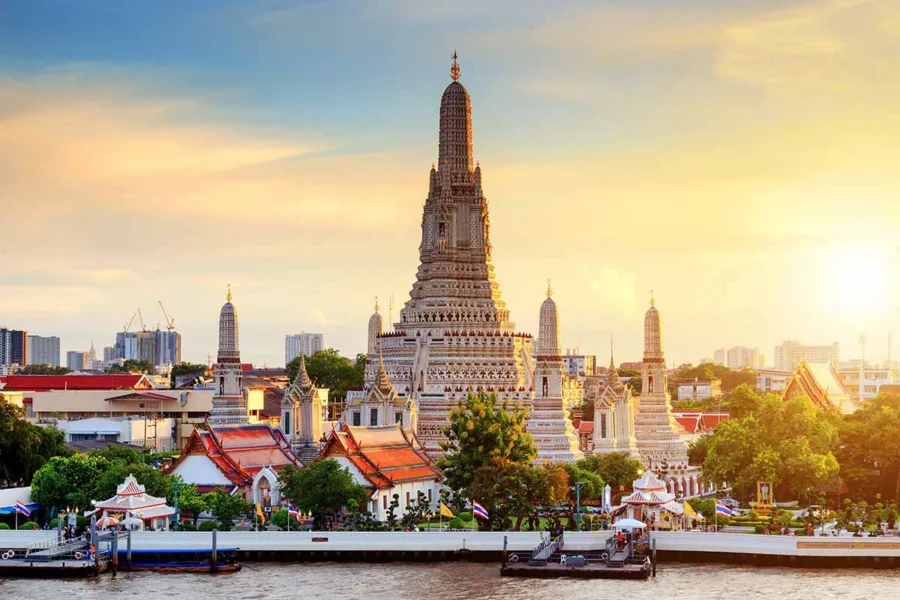
| Famous For | 70-meter (230 feet) central prang decorated with porcelain |
| Entry Fee | 200 THB |
| Dress Code | Covered shoulders and knees |
| Best Time to Visit | Late afternoon (4:00-5:30 PM) for sunset |
| Time Needed | 1-1.5 hours |
What is Wat Arun? A Clear Definition
Wat Arun (วัดอรุณ), the Temple of Dawn, is a Buddhist temple (wat) on the west bank of the Chao Phraya River. Its most striking feature is the central prang, a Khmer-style tower covered in colorful porcelain pieces.
The temple is named after Aruna, the Hindu god of the rising sun. The name suggests sunrise. But the temple faces west. The sun sets behind it. Photographers know the secret: sunset is the magic hour.
Wat Arun is not as old as it looks. The original temple dates from the Ayutthaya period (17th century). But the current towering prang was built in the early 19th century by King Rama II and King Rama III.
For the nearby Grand Palace, read the Grand Palace guide.
This is not a place to wear your beach clothes. The dress code is enforced. It is also not a place for people with severe acrophobia (fear of heights). The stairs are genuinely steep. And it is not a “hidden gem.” It is one of Bangkok’s most famous landmarks. Expect crowds.
The Architecture: What You Are Looking At
| Element | Detail |
|---|---|
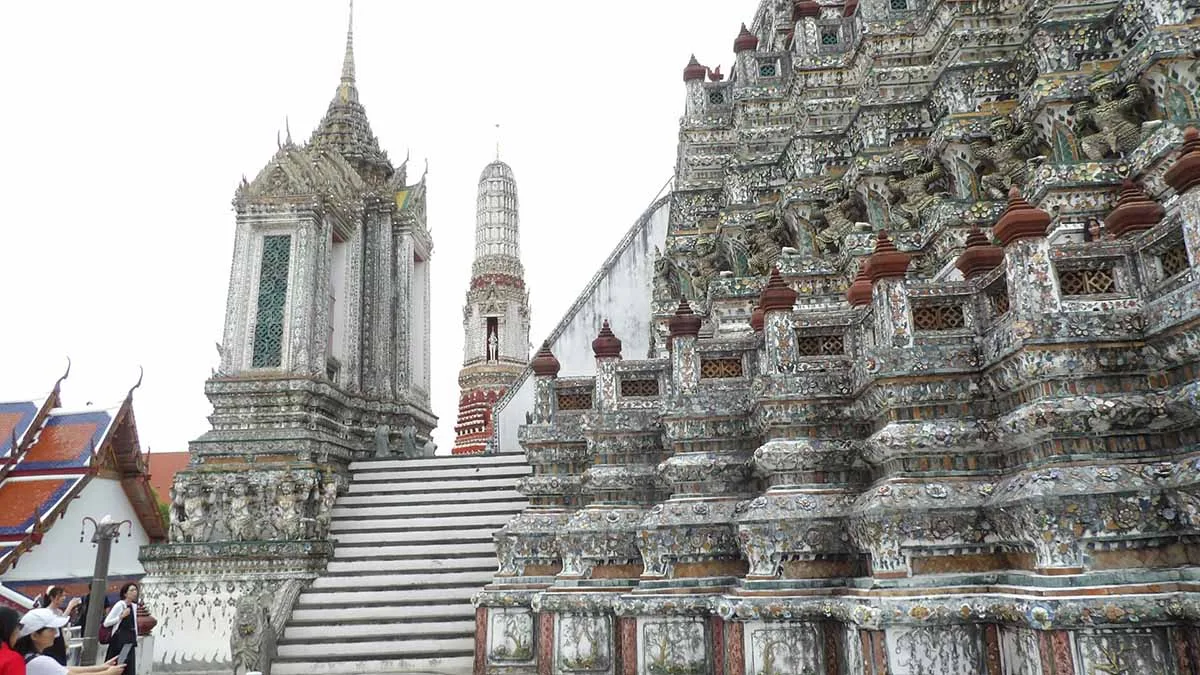
| Central Prang | 70 meters tall. Represents Mount Meru (center of the universe in Hindu-Buddhist cosmology). Decorated with porcelain flowers and Chinese ceramic fragments. |
| Four Smaller Prangs | Surround the central tower. Dedicated to the god Phra Phai (wind). |
| Corner Chedis (Stupas) | Four corner towers. Dedicated to other gods. |
| The Porcelain | Made from broken Chinese plates and teacups. Ships brought them as ballast. The temple recycled them. |
The central prang is steep. Four staircases lead to a high balcony. The climb is worth the view.
The History (The Short Version)
| Period | Event |
|---|---|
| 17th century | A small temple called Wat Makok (Temple of Olives) existed on the site. |
| 1768 | King Taksin arrives after the fall of Ayutthaya. He vows to rebuild. The Emerald Buddha is temporarily housed here. |
| 19th century | King Rama II and King Rama III enlarge the temple. The central prang is built to its current height. |
| Present | Wat Arun is one of the most famous landmarks in Bangkok. It appears on the 10 Baht coin. |
The temple is still an active place of worship. Monks live here.
How to Visit Wat Arun
| Step | Action | Why |
|---|---|---|
| 1 | Arrive at Tha Tien Pier (east bank of the river). | The pier for Wat Pho and the river crossing. |
| 2 | Take the cross-river ferry. | 5-10 THB. The ferry runs every 10-15 minutes. |
| 3 | Arrive at Wat Arun. Pay 200 THB entry. | Do not forget your change. |
| 4 | Walk around the base. Look at the porcelain details. | Do not rush to climb. |
| 5 | Climb the central prang. | Steep stairs. Do it in the late afternoon when the sun is lower. |
| 6 | Enjoy the view of the river and the Grand Palace. | You earned it. |
| 7 | Descend carefully. | The stairs are steeper on the way down. |
The single most important tip: Go at 4:00 PM. The light is golden. The stairs are cooler. The sunset views are spectacular.
How to Get There
| Method | Cost (Approx) | Time | Notes |
|---|---|---|---|
| Riverboat (Chao Phraya Express) | 30-60 THB | 30-45 minutes from Saphan Taksin BTS | Get off at Tha Tien Pier (N8). Then cross the river on the small ferry. |
| Taxi / Grab | 80-150 THB (from central Bangkok) | 20-30 minutes + traffic | Ask to go to Tha Tien Pier. Do not go directly to Wat Arun (traffic on the west bank is worse). |
| Cross-river ferry from Wat Pho | 5-10 THB | 5 minutes | The best and cheapest way. Visit Wat Pho first, then cross the river. |
Combine with Wat Pho: They are directly across the river from each other. Visit Wat Pho in the morning. Take the ferry. Visit Wat Arun in the late afternoon. This is the classic Bangkok temple day.
Costs and Budget
| Item | Cost (THB) |
|---|---|
| Wat Arun entry fee | 200 |
| Cross-river ferry (round trip) | 10-20 |
| Long pants rental (if needed) | 100-200 (deposit required) |
| Sarong rental (if needed) | 100-200 (deposit required) |
| Bottled water | 20-40 |
| Total | 200-500 THB |
Pro tip: Wear the correct clothes. Do not pay for rentals.
Best Time of Year to Visit
| Season | Weather | Crowds | Verdict |
|---|---|---|---|
| Nov-Feb | Cool, dry, pleasant | Very High | Best weather. Go late afternoon. |
| Mar-May | Very hot (35-40°C) | High | Unpleasant for climbing the prang. The stone is hot. Skip or go at sunset. |
| Jun-Oct | Afternoon showers, humid | Medium | Rain may cool the ground. Bring a raincoat. The porcelain looks vibrant when wet. |
Essential Tips and Etiquette
- Dress code is enforced. Covered shoulders and knees. No exceptions.
- Remove your shoes before entering any building (the ordination hall, etc.). You keep them on for the prang climb.
- The stairs are steep. Wear sturdy shoes. Flip-flops are dangerous.
- Do not climb on the prang if it is raining. The porcelain becomes slippery.
- Do not write or carve anything on the towers. Yes, people try.
- Be quiet in the ordination hall. Monks may be praying.
The Truth About Wat Arun
The name is wrong. The best time is sunset, not dawn. The stairs are scary. The porcelain is made from broken dishes.
And it is one of the most beautiful temples in Thailand.
Do not skip it because the name confuses you. Do not skip it because you are tired after the Grand Palace. Take the ferry. Climb the stairs. Watch the sun go down.
Where to Go Next
Wat Arun is across the river from Wat Pho and a short boat ride from the Grand Palace.
- Cross the river to visit Wat Pho (reclining Buddha).
- Walk from Wat Pho to the Grand Palace (15-20 minutes).
Summary
Wat Arun is a Buddhist temple in Bangkok on the west bank of the Chao Phraya River. It is known for its 70-meter central prang decorated with Chinese porcelain pieces. The entry fee is 200 THB. The dress code requires covered shoulders and knees. Visitors can climb the steep central tower for river views. The best time to visit is late afternoon for sunset. The temple is accessible by a cross-river ferry from Wat Pho.
Wat Arun is the perfect sunset end to a Bangkok temple day.
- Visit Wat Pho and the Grand Palace in the morning.
- Take the ferry across the river.
- Climb Wat Arun at 4:00 PM.
- Watch the sun set over the river.
Updated: 10.07.2025
What is Wat Arun?
Wat Arun, also known as the Temple of Dawn, is one of Bangkok’s most famous landmarks. Located on the west bank of the Chao Phraya River, this stunning temple is known for its towering spires, intricate decorations, and breathtaking sunset views. Whether you’re a history buff, architecture enthusiast, or just someone looking for the perfect Instagram shot, Wat Arun is a must-see attraction in Thailand’s capital.
A Temple That Catches the First Light
Despite being called the Temple of Dawn, Wat Arun looks its best at sunset, glowing beautifully with golden light. It’s like Bangkok’s way of saying, “Yes, I know my name, but I do what I want.” The temple is dedicated to Aruna, the Hindu god of the rising sun, and has been standing tall since the Ayutthaya period, undergoing several renovations over the centuries.
Architectural Marvel: Where Porcelain Meets Grandeur
Unlike other temples in Thailand that are covered in gold, Wat Arun takes a different approach – it’s decorated with colorful porcelain and seashells. Some say the Chinese porcelain pieces used to decorate the temple came from broken plates and teacups transported on trading ships. Who knew recycling could look this majestic?
The temple’s central prang (Khmer-style tower) stands at around 70 meters (230 feet) high, making it one of the tallest religious structures in Bangkok. Climbing to the top rewards visitors with stunning panoramic views of the Chao Phraya River and the city skyline – though your legs might not thank you for the steep ascent.
A Temple With a Storied Past
Wat Arun’s history dates back to the 17th century, but it gained its current name and significance when King Taksin made it part of his royal temple after liberating Siam from Burmese control. For a brief moment, Wat Arun even housed the Emerald Buddha before it was moved to Wat Phra Kaew.
How to Visit Wat Arun Like a Pro
- Opening Hours: 8:00 AM – 6:00 PM daily
- Entrance Fee: 200 THB (~$3) foreigners, locals for free
- Dress Code: Cover shoulders and knees (or rent a sarong at the entrance if you forget)
- Best Time to Visit: Early morning for fewer crowds, or late afternoon for the best photos
- Getting There: Take a boat across the river from Tha Tien Pier, because arriving at a temple by boat just feels cooler.
Fun Facts You Probably Didn’t Know
- Wat Arun’s spires are built using bricks and mortar, then covered in beautiful porcelain pieces. It’s basically the most elegant mosaic puzzle ever made.
- The temple appears on the 10 Baht coin. Yes, that change in your pocket might just have a piece of Wat Arun with you.
- Despite being a Buddhist temple, its design has strong Hindu influences, making it a fascinating blend of cultures.
To fully appreciate the spiritual rhythm surrounding Thailand’s temples, explore how Theravāda Buddhism shapes daily life and cultural celebrations. Learn about the life of Theravāda monks in Thailand, discover the meaning behind the Tak Bat almsgiving ceremony, and plan your visit around key events with the Thailand Festivals Calendar. These insights offer a deeper understanding of the values, rituals, and celebrations that make each temple more than just a landmark — they’re living expressions of Thai culture.
[ufaqsw id=3255]
What should I wear to Wat Arun?
Modest clothing is required—shoulders and knees should be covered. If you forget, you can rent cover-ups at the entrance.
Wat Arun is more than just a temple; it’s a symbol of Bangkok’s rich heritage and artistic beauty. Whether you’re soaking in the sunrise, climbing the steep steps, or just admiring the sparkling porcelain tiles, this temple is sure to leave a lasting impression. So, pack your camera, wear comfortable shoes, and get ready for an unforgettable adventure at the Temple of Dawn!
You Might Also Like
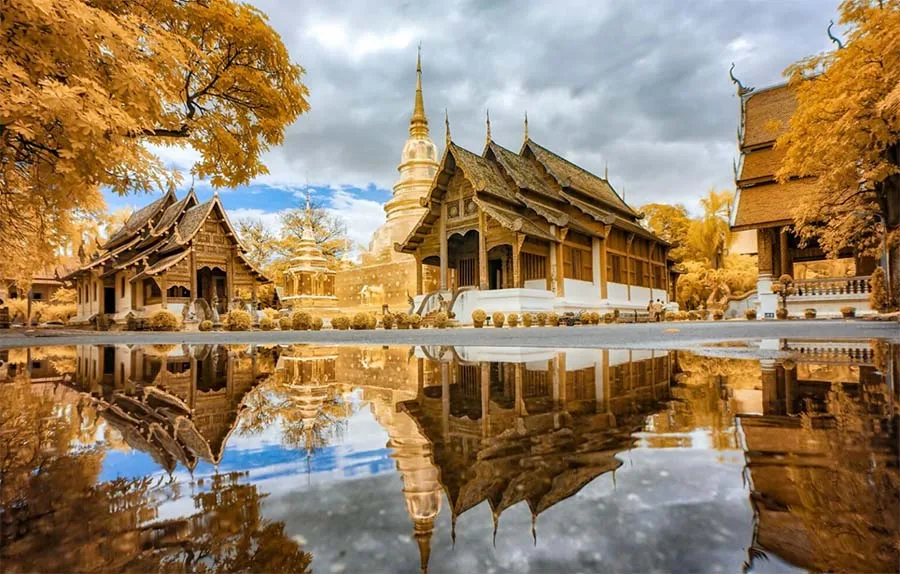
Wat Phra Singh: The Must-Visit Temple in Chiang Mai
Wat Phra Singh is one of Chiang Mai’s most famous temples, known for its stunning Lanna architecture, golden…
The Guide to Bangkok’s Best Night Markets
This guide covers the best night markets in Bangkok, from the famous (Chatuchak) to the overrated (Damnoen Saduak).…
Wat Pho: The Guide to Bangkok’s Reclining Buddha
This guide covers Wat Pho, the Temple of the Reclining Buddha, in Bangkok. For the nearby Grand Palace,…