
The historic capital city of the Ayutthaya Kingdom stands today as a vast archaeological landscape of crumbling red-brick prangs and decapitated stone Buddhas. Located roughly 80 kilometers north of modern Bangkok, this UNESCO World Heritage Site represents the tragic, war-torn artistic peak of ancient Siamese civilization. It is an essential day-trip or overnight circuit designed specifically for independent explorers who want to step out of Thailand’s hyper-modern mall culture and experience raw history.
Key Takeaways
- Individual major temple tickets cost 80 Baht each for foreign travelers, making the 300 Baht multi-temple pass a major cost-saver if you intend to visit four or more core ruins.
- The third-class local train from Krung Thep Aphiwat Central Terminal costs next to nothing and delivers a highly authentic, window-breeze travel experience that beats any highway minivan.
- Strict Buddhist dress codes apply across all historical zones, meaning your shoulders and knees must be completely covered before passing any ticket barrier.
- Midday heat on the exposed brick flats regularly hits brutal, exhausting thresholds, making a morning-focused itinerary highly recommended.
- Renting a covered tuk-tuk or electric golf cart provides a massive relief from the blazing sun compared to pushing a heavy, single-speed rental bicycle across busy local intersections.
Quick Facts
- Location: Phra Nakhon Si Ayutthaya District, Central Thailand.
- Region: Central Plains.
- Coordinates: 14.3569° N, 100.5530° E.
- Opening Hours: 08:00 to 18:00 daily (select ruins are illuminated externally until 21:00).
- Entrance Fee: Free entry to the general park areas; 80 Baht per major individual temple, or 300 Baht for an all-inclusive 7-temple pass.
- Dress Code: Modest attire. Shoulders and knees must be covered. No torn jeans, sleeveless vests, or transparent fabrics.
- Best Time of Day: 08:00 to 10:30 and 16:00 to 18:00.
- Best Months to Visit: November through February for drier, more bearable temperatures.
- Estimated Visit Duration: 4 to 6 hours for a solid day trip; full weekend for deep exploration.
- Photography Rules: Allowed everywhere, but you must keep your head lower than any Buddha head when taking photos, especially at the famous tree-root site.
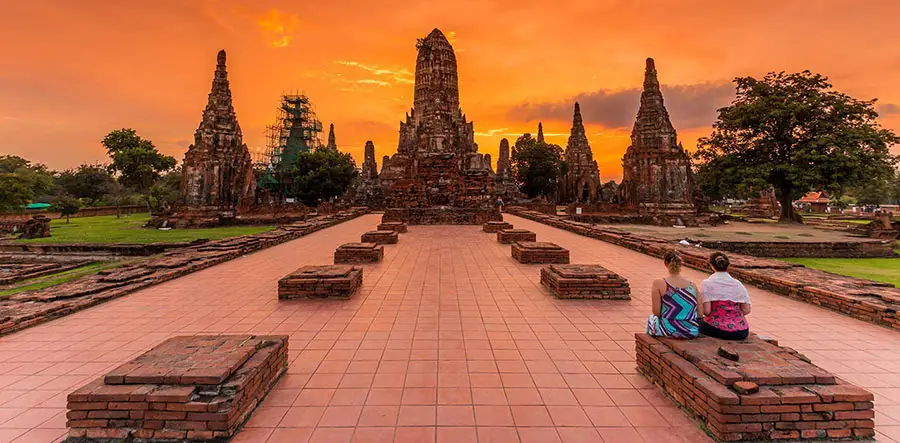
Overview
Founded in 1350, the Ayutthaya Kingdom grew to become one of the most prosperous, cosmopolitan trading centers on earth before its catastrophic destruction in 1767. Its strategic location on an island surrounded by three major rivers-the Chao Phraya, the Pasak, and the Lopburi-insulated it from early invasions and nourished an era of staggering architectural ambition. At its peak, the city hosted global merchants from Europe, Persia, and East Asia, all marveling at a skyline heavily gilded in gold leaf.
Everything changed when the Burmese army breached the city walls after a grueling fifteen-month siege, systematically burning the structures and melting down the golden statues. What remains today is a solemn, sprawling landscape of exposed red brickwork that serves as a visceral reminder of the fragility of empires. Independent travelers come here to walk among the literal foundations of modern Thai identity, mapping out a historical arc that explains the rise of the current Rattanakosin era in Bangkok.
You do not visit this place to see pristine, manicured reconstructions. Instead, you come here to witness the raw intersection of nature and human history, where massive banyan roots slowly swallow ancient stone faces. It is a gritty, hot, and intensely moving space that rewards those who skip the air-conditioned tour buses and navigate the historical paths on their own terms.
What to See & Do
Wat Mahathat
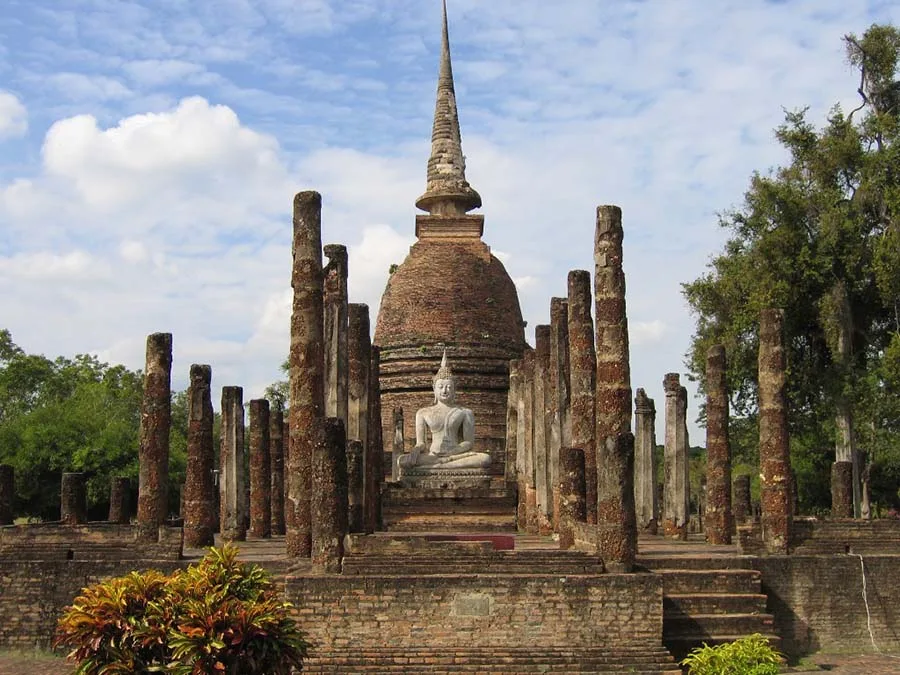
This is the symbolic heart of the park ruins, widely known for the iconic stone Buddha head tightly cradled within the growing root system of a banyan tree. Beyond that single photo-spot, the temple holds a massive central prang that collapsed decades ago, leaving behind a haunting field of headless statues and leaning brick towers. Entry costs 80 Baht if purchased individually.
Wat Phra Si Sanphet
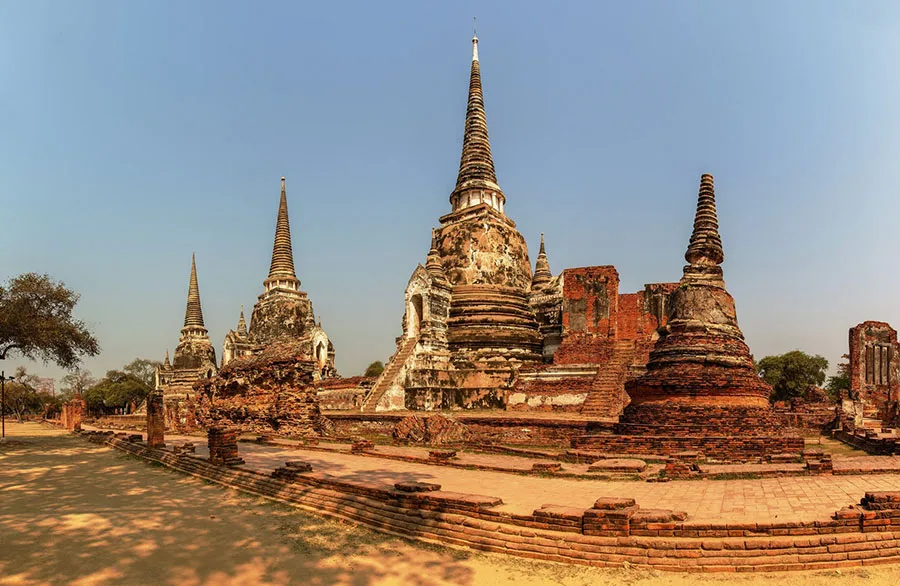
Serving as the grandest royal temple on the old palace grounds, this site features three massive, aligned bell-shaped chedis that survived the flames of 1767. These structures once held royal ashes and formed the structural blueprint for the famous Wat Phra Kaew inside Bangkok’s Grand Palace. Walking the long stone platforms gives you an immediate sense of the sheer scale of ancient Siamese royal authority.
Wat Chaiwatthanaram
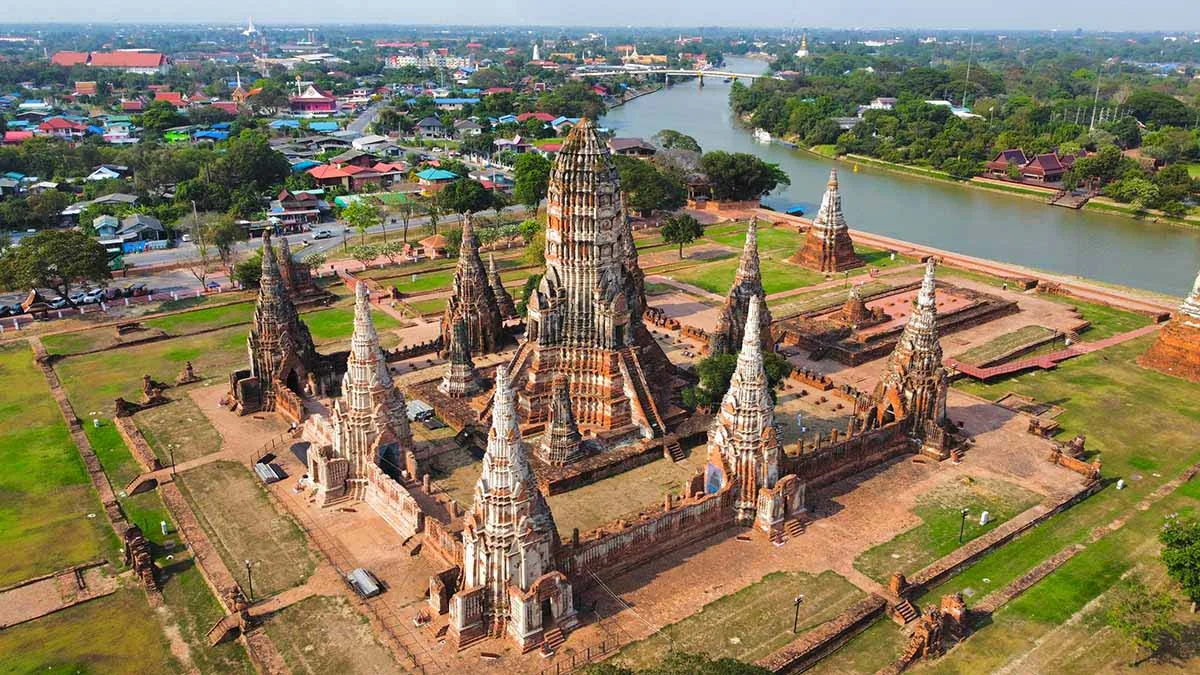
Positioned directly on the western bank of the Chao Phraya River, this 17th-century masterpiece features a soaring, Khmer-style central tower surrounded by smaller prangs. It is arguably the most visually striking and structurally intact temple in the region, especially during the late afternoon. Local vendors nearby rent out traditional Thai costumes, a massive trend for regional travelers looking to take stylistic photos against the dramatic stone backdrops.
| Temple Name | Structural Highlight | Key Feature |
| Wat Mahathat | Collapsed Grand Prang | Buddha Head in Roots |
| Wat Phra Si Sanphet | Three Aligned Chedis | Ancient Royal Vaults |
| Wat Chaiwatthanaram | Khmer-Style Prasat | Riverside Sunset View |
How to Get There
Getting to the ancient capital from Bangkok is incredibly straightforward and budget-friendly. The most authentic option is the State Railway of Thailand (SRT) train departing regularly from the modern Krung Thep Aphiwat Central Terminal. A third-class, fan-cooled ticket costs less than 50 Baht, providing an unvarnished, breezy one-to-two-hour journey through the northern edges of the Bangkok metropolis. You can drill into the scheduling details and pricing structures in our step-by-step blueprint for the Bangkok to Ayutthaya Train Journey.
If you prefer speed and air conditioning, public minivans depart from the Mochit New Van Terminal in northern Bangkok. These vans cost roughly 100 to 150 Baht per seat and complete the journey in just under 90 minutes, though they drop you off in the chaotic center of the modern city rather than directly at the historic ruins. Private taxis booked via apps like Grab or Bolt will run you between 1,200 and 1,500 Baht each way for total door-to-door convenience.
Best Time to Visit
The absolute sweet spot for exploring the ruins runs from November through February. During these cooler months, the northeast monsoon brings lower humidity levels and clear blue skies, making long walks among unshaded brick walls highly manageable. Even during this prime window, you want to clear your major sightseeing targets before 11:00 to escape the oppressive midday heat trap.
March through May brings blazing, dry heat where temperatures routinely cross 40°C, turning the exposed stone platforms into literal ovens. The rainy season, running from June through October, brings sudden downpours but also drastically thins out the tourist crowds. For a full breakdown of what to carry and how to survive the seasonal monsoon downpours, refer directly to our tactical Thailand Rainy Season Guide. Rainy season visits offer a unique advantage, as the wet brickwork takes on a deep, rich hue and the surrounding vegetation turns incredibly lush.
Costs & Budget
A day trip to the ruins is highly economical if you avoid the aggressive commission traps. Transportation will scale from a 40 Baht local train fare to a 1,500 Baht private car hire. Food options inside the historical park are largely comprised of local noodle shops and riverside cafes, where an authentic bowl of boat noodles (kuaitiao ruea) costs between 40 and 60 Baht.
- Local Train (Third Class): 20 – 50 Baht
- Individual Temple Entry: 80 Baht per site
- 7-Temple Combined Pass: 300 Baht total
- Local Tuk-Tuk Hire: 200 – 300 Baht per hour
- Basic Local Lunch: 50 – 120 Baht
Tips & Etiquette
The ruins are not just historical artifacts; they remain active spaces of spiritual reverence for Thai Buddhists. You must never climb on top of ancient brick walls or sit on crumbling chedi bases for a photo opportunity. When photographing the famous Buddha head at Wat Mahathat, etiquette dictates that your body must be positioned in a respectful crouch or kneel, ensuring your head sits physically lower than the image of the Buddha.
Watch out for the aggressive tuk-tuk drivers waiting right outside the train station exit. They will often state that the temples are “too far to walk” and quote inflated package rates of 500 Baht per hour. Simply walk past the initial line of drivers, check your local mapping app, and negotiate a flat rate of 200 to 300 Baht per hour for an official, covered vehicle to ferry you between distant ruins.
Nearby Places & Alternatives
If you want to experience ancient Siamese ruins without the heavy day-tripper crowds of the central plain, consider heading further north to Lopburi. Located roughly 60 kilometers past Ayutthaya, Lopburi offers a fascinating mix of Khmer-era shrines seamlessly integrated into a modern city center famously overrun by wild macaques.
For those who want an entirely alternative cultural vibe, the ancient capital of Sukhothai sits several hours to the north. Sukhothai offers an immensely peaceful, park-like environment with massive water moats and manicured lawns. It is a superior choice for travelers who value quiet, long-distance bicycle exploration over a frantic, fast-paced single-day trip out of Bangkok.
Skipping this historical anchor leaves a massive blind spot in your understanding of modern Thailand. If you only experience Bangkok’s glittering temples or the white-sand beaches of the southern islands, you are looking at a highly polished, heavily commercialized version of Thai culture. Skipping the foundational ruins means missing the physical scars of the warfare, international trade, and religious devotion that forced the kingdom to relocate downriver and reinvent itself.
Summary
This historical park is absolutely not a polished theme park. Do not expect air-conditioned pathways, pristine white marble, or English-speaking tour guides waiting at every corner. These are raw, exposed archeological ruins that sit directly inside a functioning, noisy modern Thai city. You will hear local traffic hum while looking at 600-year-old structures, and that unpolished contrast is precisely what makes the experience genuine.
To maximize your journey to this ancient center of power, prioritize an early morning departure from Bangkok to secure cool weather and empty temple grounds. Buy the 300 Baht multi-temple pass if you plan to explore deeply, and always carry a lightweight sarong or long pants to meet the mandatory dress requirements at the ticket gates. Choose a covered tuk-tuk for affordable transit between sites, and always treat the headless stone fragments with the same spiritual respect you would show a modern altar.
This article is part of Ayutthaya cluster. Be sure to also read about: Ayutthaya Floating Market, Royal Elephant Kraal, Ultimate Fun Guide to Ayutthaya, Ayutthaya vs Sukhothai, Guide to Exploring the Ayutthaya Kingdom, Wat Ratchaburana, Wat Tha Ka Rong, Wat Yai Chai Mongkhon, Bang Pa-In Royal Palace, Wat Phra Si Sanphet, Wat Chaiwatthanaram, Wat Mahathat, Ayutthaya Historical Park
You Might Also Like

Koh Lipe vs Koh Phi Phi: Which Thai Island Wins in 2025?
🏝️ Koh Lipe vs Koh Phi Phi: Which Thai Island is Actually Better for Your Next Escape? Torn…

Thailand’s New Rules on Alcohol & Cannabis
🚨 What’s New in 2025? In 2025, Thailand banned public cannabis use, limited cannabis access to medical use…
Exploring Thailand in Two Weeks – Is it Possible?
Exploring Thailand in Two Weeks: From Lazy Beaches to Adventurous Journeys Is it possible to explore Thailand in…