
Introduction
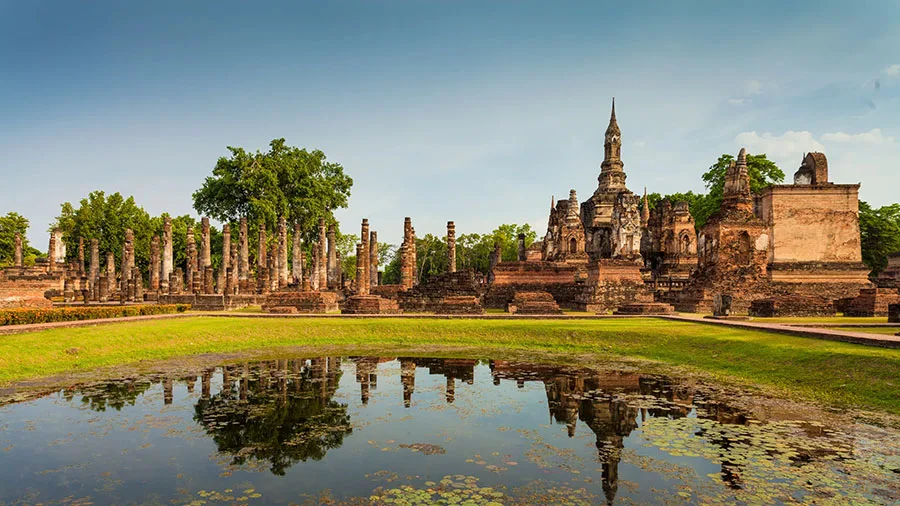
Located in the heart of the ancient city of Ayutthaya, Wat Mahathat is one of the most famous historical temples in Thailand and one of the most recognizable landmarks inside Ayutthaya Historical Park, a UNESCO World Heritage Site.
- 1Introduction
- 2Key Takeaways (Read These First)
- 3Quick Facts
- 4What is Wat Mahathat? A Clear Definition
- 5Why Wat Mahathat Became Famous (The Buddha Head in the Tree)
- 6The Essential Parts of the Temple (Beyond the Tree)
- 7The Central Prang (Khmer-style Tower)
- 8The Row of Seated Buddhas
- 9The Surrounding Stupas
- 10How to Get to Wat Mahathat from Bangkok
- 11Costs and Budget (Real Numbers)
- 12Best Time to Visit Wat Mahathat
- 13Essential Tips and Etiquette (How Not to Be a Bad Tourist)
- 14What is Actually Being Done to Preserve It? (A Causal Bridge)
- 15Where to Go Next (Internal Links to Your Existing Content)
- 16The Truth About Wat Mahathat
- 17Summary
The temple is best known for the iconic Buddha head intertwined within the roots of a banyan tree, but Wat Mahathat is far more than a photo stop. It was once one of the most important religious centers of the Ayutthaya Kingdom and remains one of the strongest symbols of Thailand’s Buddhist history and cultural heritage.
For travelers exploring Ayutthaya from Bangkok or building a Northern Thailand travel itinerary, Wat Mahathat is considered an essential stop because it combines Thai history, Buddhist architecture, archaeological significance, and one of the most visually unique sights in Southeast Asia.
Key Takeaways (Read These First)
- Wat Mahathat is not just the Buddha head in the tree. It was the spiritual heart of the Ayutthaya Kingdom. Do not come only for the photo.
- The head is in the roots because the Burmese sacked the city in 1767. The tree grew around the fallen statue over centuries. That is not magic. That is time and nature reclaiming what was destroyed.
- Visit at 8:00 AM. The light is soft. The tour buses have not arrived. The heat is survivable.
- Do not stand above the Buddha head for your photo. Kneel. Keep your head lower than the Buddha’s head. That is respect, not a suggestion.
Quick Facts
| Category | Detail |
|---|---|
| Location | Ayutthaya Historical Park, Ayutthaya, Thailand |
| Distance from Bangkok | Approximately 80 km north |
| Built | 14th century (1374-1395 CE) |
| Original Purpose | Royal monastery, sacred relic storage |
| Destroyed by | Burmese army (1767) |
| Famous For | Sandstone Buddha head entwined in banyan tree roots |
| Entry Fee | 50 THB (included in the combined ticket for some temples, or paid separately) |
| Dress Code | Shoulders and knees must be covered. Strictly enforced. |
| Best Time to Visit | November to February (cool, dry). 8:00 AM or 3:00 PM for best light. |
| Time Needed | 45 minutes to 1.5 hours |
What is Wat Mahathat? A Clear Definition
Wat Mahathat (วัดมหาธาตุ), which translates to “Temple of the Great Relic,” was one of the most important royal monasteries in the Ayutthaya Kingdom. It was built in the 14th century as a ceremonial and spiritual center, likely housing a sacred Buddha relic.
Unlike a functioning temple with active monks and daily prayers, Wat Mahathat is now a protected archaeological ruin. You are walking through the remains of a destroyed kingdom, not a living temple. That is why it feels different from Wat Pho in Bangkok.
For the context of the entire site, read the full Ayutthaya Historical Park guide.
Why Wat Mahathat Became Famous (The Buddha Head in the Tree)
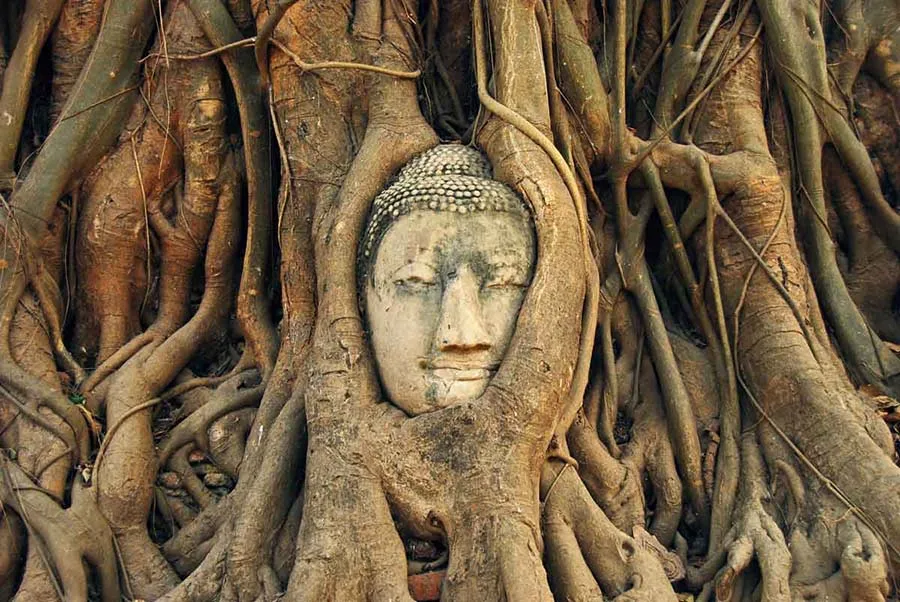
The Burmese army sacked Ayutthaya in 1767. They beheaded Buddha statues to show their power. One sandstone head rolled to the base of a banyan tree.
Over 250 years, the tree grew. The roots spread. They wrapped around the stone. They lifted it off the ground. What the Burmese destroyed, nature preserved in a different form.
That is not a miracle. It is not a curse. It is a slow, natural process. But it created an image that symbolizes the resilience of Thai Buddhism.
This is not a mystical story about a magical tree. There are legends. They are not history. This is also not a guide to the entire Ayutthaya Historical Park. I have covered that separately. Finally, this is not a recommendation to skip this site. It is essential. But come for the right reasons.
The Essential Parts of the Temple (Beyond the Tree)
Do not take your photo of the Buddha head and leave. You will miss the point.
The Central Prang (Khmer-style Tower)
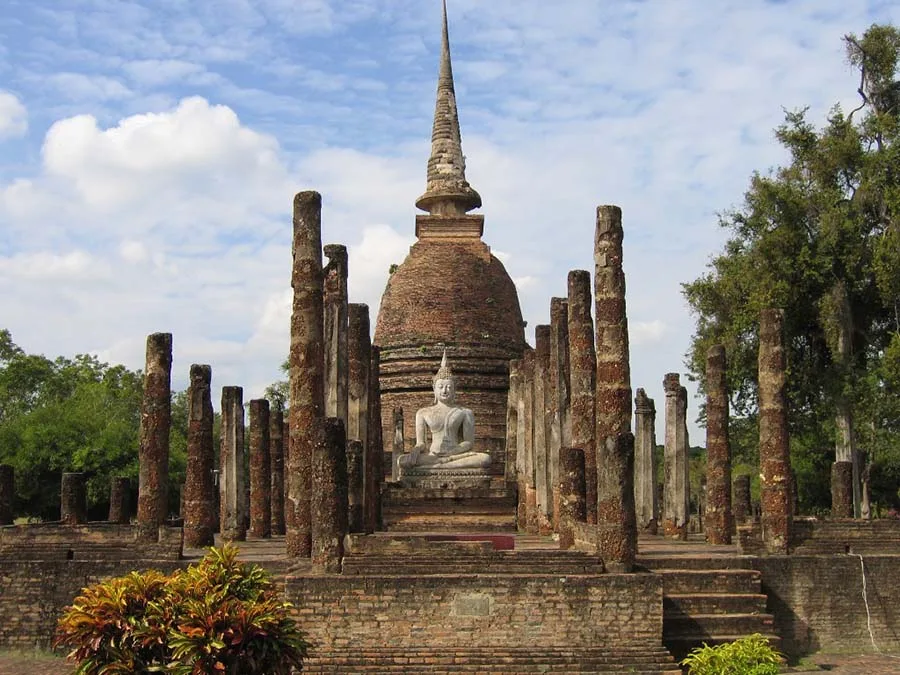
The main prang (tower) was once 40-50 meters tall. It was built in the Khmer style, like Angkor Wat. Today, only the base remains. You can still see the staircases that lead nowhere and the empty niches where standing Buddha images once stood.
The Row of Seated Buddhas
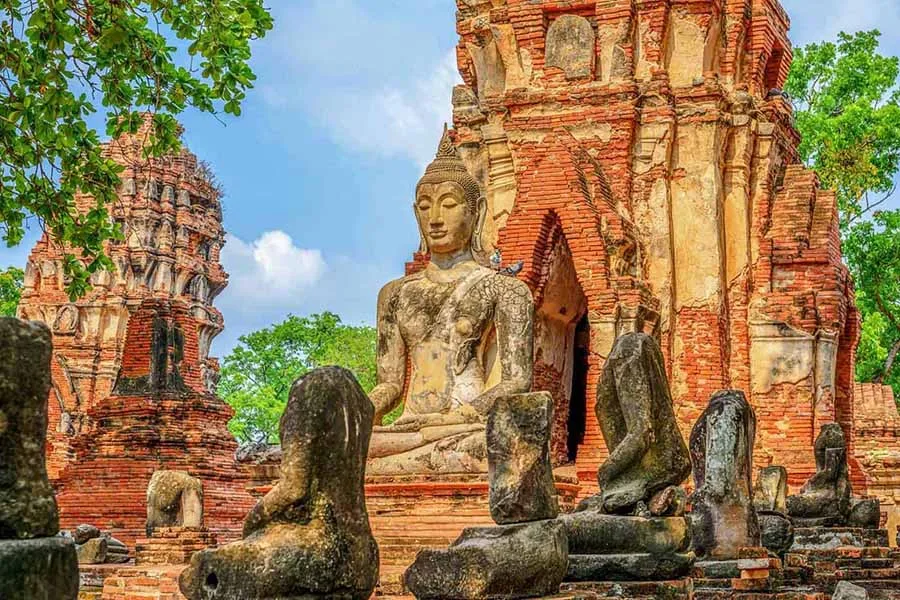
To the east of the prang, there is a row of seated Buddha statues. Most are headless. Look at the different hand positions (mudras). They represent different moments in the Buddha’s life. This is where Thai Buddhists still come to pay respects, even though the temple is a ruin.
The Surrounding Stupas
Smaller stupas dot the grounds. Some contain ashes of royalty. Others mark where important meditation buildings once stood. Walk around. Read the small information signs. They tell the real story.
How to Get to Wat Mahathat from Bangkok
| Method | Cost (Approx) | Travel Time | Best For | Notes |
|---|---|---|---|---|
| Train from Bangkok | 15-300 THB (3rd class to fancy) | 1.5-2 hours | Budget travelers, train lovers | Full Bangkok to Ayutthaya train guide here. |
| Minivan from Mo Chit | 60-100 THB | 1-1.5 hours | Speed and simplicity | Drops you at the Ayutthaya minivan terminal. You will need a taxi or songthaew from there. |
| Private Car/Taxi | 1,000-1,500 THB (one way) | 1 hour | Groups of 3-4, limited time | The most convenient. Ask your hotel in Bangkok to arrange. |
From Ayutthaya train station, you can rent a bicycle (40-60 THB) or hire a tuk-tuk for the day (800-1200 THB) to take you to Wat Mahathat and the other main temples.
Costs and Budget (Real Numbers)
| Item | Approx Cost (THB) |
|---|---|
| Train ticket (Bangkok-Ayutthaya, 3rd class) | 15-20 |
| Bicycle rental | 40-60 |
| Wat Mahathat entry fee | 50 |
| Lunch nearby | 100-200 |
| Water | 20-40 |
| Total for the day (approx) | 250-400 THB (excluding transport from Bangkok) |
Best Time to Visit Wat Mahathat
| Season | Weather | Crowds | Verdict for Wat Mahathat |
|---|---|---|---|
| Nov-Feb | Cool, dry, pleasant | High | Best time. Go early (8 AM) to beat crowds. |
| Mar-May | Very hot (35-40°C), smoggy | Low | Not recommended. The stone radiates heat. You will suffer. |
| Jun-Oct | Afternoon showers, lush greenery | Low | The tree roots are green and beautiful. Bring a raincoat. |
The single most important tip: Go at 8:00 AM. The light is soft. The temperature is bearable. The tour groups from Bangkok have not arrived yet. You will have the Buddha head mostly to yourself.
Essential Tips and Etiquette (How Not to Be a Bad Tourist)
- Do not stand above the Buddha head for your photo. Seriously. Kneel down. Keep your head lower than the Buddha’s head. This is the most common mistake foreigners make.
- Dress code is enforced. Shoulders and knees must be covered. No exceptions. There are sometimes people selling wraps at the entrance, but do not rely on that.
- Remove your shoes before walking on any elevated platform or into any building (even ruined ones). There will usually be a shoe rack.
- Do not touch the Buddha head. The oils from your hands damage the sandstone. The roots are also fragile.
- Do not climb on the ruins. The structures are unstable. There are guards who will whistle at you.
- Bring water. There is almost no shade between the main structures. Dehydration is real.
What is Actually Being Done to Preserve It? (A Causal Bridge)
UNESCO and the Thai Fine Arts Department actively maintain Ayutthaya Historical Park. They do not let the roots grow unchecked. They trim them. They monitor the structural integrity of the head itself.
The head is not in danger of being crushed. It is also not a wild, uncontrolled natural phenomenon. It is a carefully managed archaeological site.
This matters because some online stories suggest the tree is about to consume the head. That is not true. The site is stable. It will be there for your grandchildren to see.
Where to Go Next (Internal Links to Your Existing Content)
After you finish at Wat Mahathat, you are already inside the Ayutthaya Historical Park. Do not leave.
- Wat Phra Si Sanphet is a 5-10 minute walk away. It was the royal temple, directly connected to the king’s palace. A dedicated guide for Wat Phra Si Sanphet is coming soon.
- Wat Ratchaburana is right next to Wat Mahathat. You can climb down into its crypt. A dedicated guide for Wat Ratchaburana is coming soon.
- Wat Chaiwatthanaram is on the west bank of the river. It is a 10-15 minute tuk-tuk ride. The sunset there is spectacular. A dedicated guide for Wat Chaiwatthanaram is coming soon.
For a full day plan, read the Ayutthaya Historical Park guide.
The Truth About Wat Mahathat
The Buddha head in the tree is not a secret. It is not a hidden gem. It is crowded, famous, and on every postcard.
That does not make it bad. The real value of Wat Mahathat is not the photo. It is standing in a place where the spiritual and political heart of a kingdom once beat, seeing how nature reclaims what humans destroy, and spending a quiet moment with a very old piece of stone.
Take the photo. Then put the phone down. Look at the rest of the ruins. That is where the real history is.
Summary
Wat Mahathat is a 14th-century Buddhist temple ruin in Ayutthaya, Thailand, a UNESCO World Heritage Site. It is famous for a sandstone Buddha head entwined in the roots of a banyan tree, a result of the Burmese invasion in 1767. The site also contains the remains of a large central prang, rows of headless Buddha statues, and smaller stupas. It is located 80 kilometers north of Bangkok and is accessible by train, minivan, or car. The entry fee is 50 THB. The best time to visit is early morning during the cool season (November to February). Visitors must follow a strict dress code and show respect when photographing the Buddha head.
Wat Mahathat is the heart of Ayutthaya. Do not see it in isolation.
- Plan your day with the Ayutthaya Historical Park guide.
- Get there from Bangkok with the Bangkok to Ayutthaya train.
- Afterwards, explore the famous Wat Chaiwatthanaram at sunset.
The temple grounds are relatively easy to explore on foot, and most visitors spend between 45 minutes and 2 hours at the site depending on photography, historical interest, and crowd levels.
This article is part of Ayutthaya cluster. Be sure to also read about: Ayutthaya Floating Market, Royal Elephant Kraal, Ultimate Fun Guide to Ayutthaya, Ayutthaya vs Sukhothai, Guide to Exploring the Ayutthaya Kingdom, Wat Ratchaburana, Wat Tha Ka Rong, Wat Yai Chai Mongkhon, Bang Pa-In Royal Palace, Wat Phra Si Sanphet, Wat Chaiwatthanaram, Wat Mahathat, Ayutthaya Historical Park
You Might Also Like
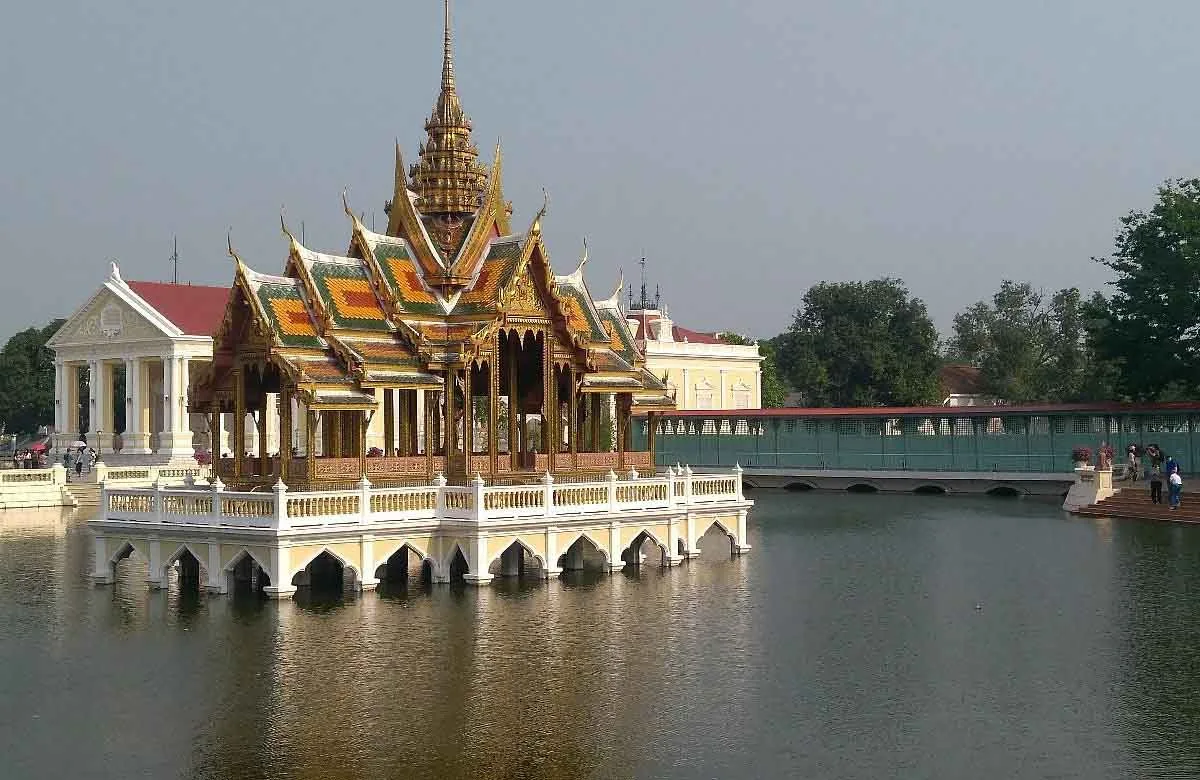
Ultimate Fun Guide to Ayutthaya: Beyond the Ruin Fatigue
This guide covers the fun, non-temple side of Ayutthaya. For the main historical park and temple ruins, read…
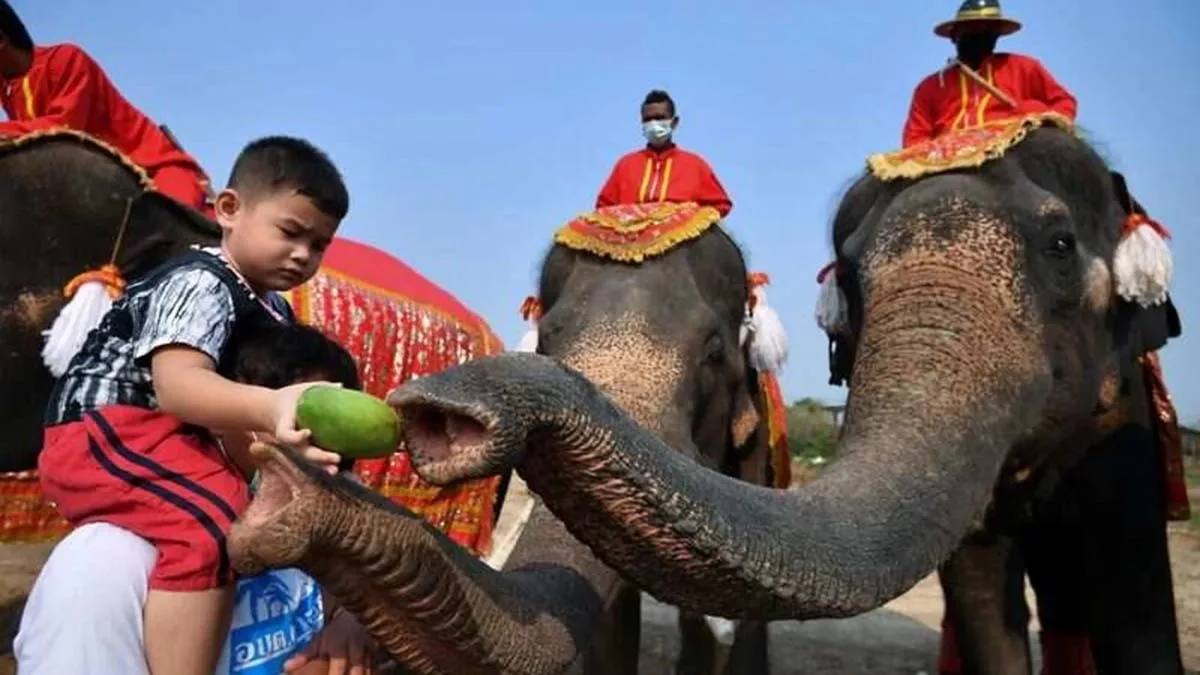
The Royal Elephant Kraal: Ayutthaya’s Historical Elephant Village
This guide covers the Royal Elephant Kraal National Museum in Ayutthaya, a historical site. For active elephant camps,…
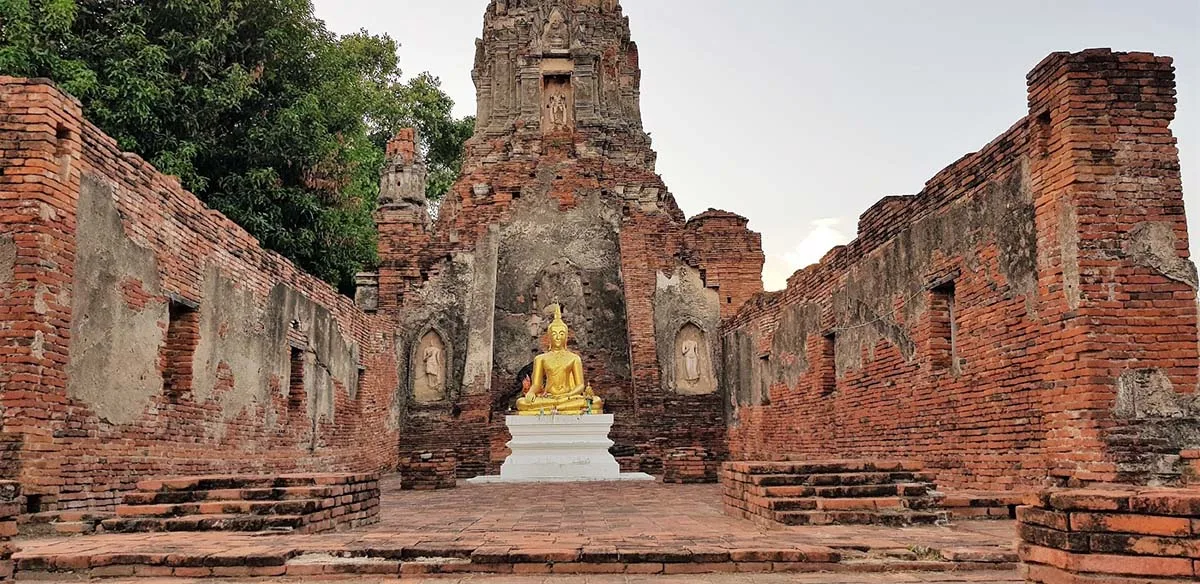
Secret Ayutthaya: Hidden Gems You Won’t Find in the Main Guides
This guide covers the hidden gems of Ayutthaya, places off the main tourist trail. For the main temples…