
This guide covers the royal temple of Wat Phra Si Sanphet in Ayutthaya. For the full context of the historical park and other ruins, read the Ayutthaya Historical Park guide.
- 1Key Takeaways (Read These First)
- 2Quick Facts
- 3What is Wat Phra Si Sanphet? A Clear Definition
- 4What This Guide Is NOT
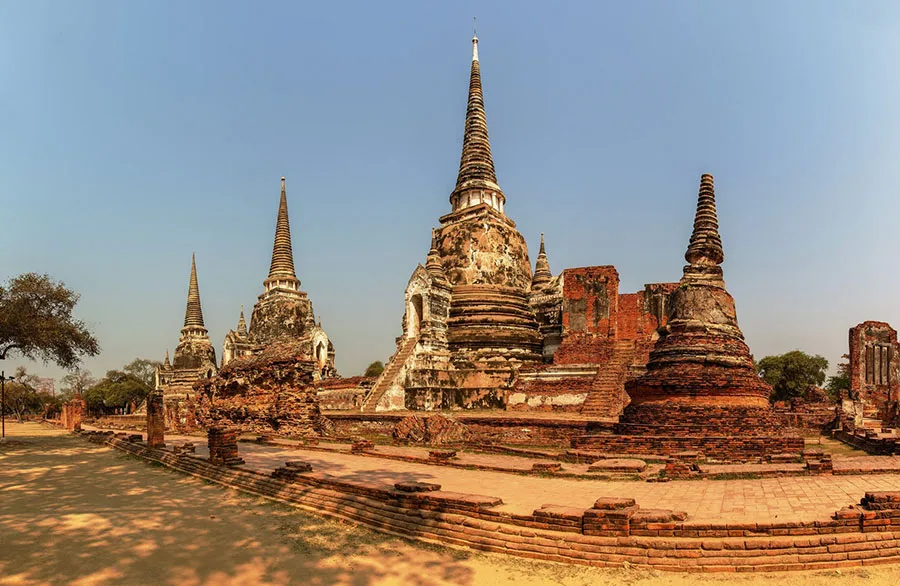
- 5The Three Chedis: What You Are Actually Looking At
- 6The Lost Golden Buddha (What Happened to It)
- 7How to Get to Wat Phra Si Sanphet
- 8Costs and Budget (Real Numbers)
- 9Best Time to Visit
- 10Essential Tips and Etiquette
- 11What is Actually Being Done to Preserve It?
- 12The Truth About Wat Phra Si Sanphet
- 13Summary
Key Takeaways (Read These First)
- This was not a normal temple. Monks did not live here. Only the king and his court used it. It was a royal chapel, not a public monastery.
- The three iconic chedis (stupas) contain the ashes of Ayutthayan kings. That is why they are still revered today.
- The famous 16-meter golden Buddha is gone. The Burmese melted it down in 1767. There is a replica at the nearby Wat Phra Mongkhon Bophit.
- This temple directly inspired the layout of the Grand Palace in Bangkok. If you have seen that, you will recognize the pattern.
- Do not just take a photo of the three chedis and leave. Walk to the back. See the rows of smaller chedis. That is where the lesser royalty and courtiers were honored.
Quick Facts
| Category | Detail |
|---|---|
| Location | Ayutthaya Historical Park, Ayutthaya, Thailand |
| Built | 1448 CE (during the reign of King Borommatrailokkanat) |
| Original Purpose | Royal chapel (no monks, only royalty) |
| Destroyed by | Burmese army (1767) |
| Famous For | Three large bell-shaped chedis (stupas) containing royal ashes |
| Entry Fee | 50 THB (often included in the combined ticket with Wat Mahathat) |
| Dress Code | Shoulders and knees covered. Strictly enforced. |
| Best Time to Visit | November to February (cool, dry). 8:00 AM or 3:00 PM for best light. |
| Time Needed | 30-45 minutes |
What is Wat Phra Si Sanphet? A Clear Definition
Wat Phra Si Sanphet (วัดพระศรีสรรเพชญ์) was the holiest and most important temple within the royal palace compound of the Ayutthaya Kingdom. It was built in 1448 and served as the king’s private chapel. No monks resided here. Only the king, his family, and high-ranking court officials could enter.
The temple’s name translates roughly to “Temple of the Holy, Splendid, and Omniscient Buddha.” It once housed a 16-meter (52-foot) standing Buddha image covered in 340 kilograms (750 pounds) of gold. That gold is long gone. The three massive chedis (stupas) remain.
For the full context of the historical park, read the Ayutthaya Historical Park guide.
What This Guide Is NOT
This is not a complete history of the Ayutthaya Kingdom. It is not a guide to every building in the royal palace grounds (most are gone). It is also not a mystical guide to “energy” or “vibes.” This is a guide to a historically significant ruin with a clear story to tell.
The Three Chedis: What You Are Actually Looking At
| Chedi | Who It Honors | Notes |
|---|---|---|
| Eastern Chedi | King Borommatrailokkanat | The king who built the temple |
| Middle Chedi | King Borommarachathirat III | The largest of the three |
| Western Chedi | King Ramathibodi II | The last of the three royal chedis |
The ashes of each king are interred within their respective chedi. That is why Thai Buddhists still come here to pay respects. It is a royal cemetery, not just a pretty photo.
Behind the main three chedis, there are rows of smaller chedis. Those contain the ashes of lesser royalty, high-ranking nobles, and important courtiers. Walk back there. It is quiet. It gives you a sense of the scale of the royal complex.
The Lost Golden Buddha (What Happened to It)
The temple’s most famous treasure was the Phra Si Sanphet Buddha. It was a 16-meter (52-foot) tall standing Buddha covered in 340 kilograms (750 pounds) of solid gold.
When the Burmese army sacked Ayutthaya in 1767, they did not just topple the statue. They methodically stripped the gold and melted it down. The stone core was abandoned.
You cannot see the original. It is gone forever.
However, a replica stands in the nearby Wat Phra Mongkhon Bophit, which is directly adjacent to this temple. Walk there afterwards.
How to Get to Wat Phra Si Sanphet
| Method | From | Cost (Approx) | Time | Notes |
|---|---|---|---|---|
| Bicycle rental | Ayutthaya train station | 40-60 THB/day | 15 minutes to cycle | The best way to see the park. Flat roads. |
| Tuk-tuk hire | Anywhere in Ayutthaya | 800-1200 THB for half-day | 10 minutes | Negotiate a flat rate for a circuit of temples. |
| Walking | From Wat Mahathat | Free | 10 minutes | They are very close. You can walk between them. |
From Bangkok, take the train (1.5-2 hours) or a minivan (1-1.5 hours) to Ayutthaya. Then use one of the above methods.
Costs and Budget (Real Numbers)
| Item | Approx Cost (THB) |
|---|---|
| Wat Phra Si Sanphet entry fee | 50 |
| Bicycle rental (full day) | 40-60 |
| Water | 20-40 |
| Snack from nearby vendor | 20-50 |
| Total for this temple (excluding transport to Ayutthaya) | 100-200 THB |
Best Time to Visit
| Season | Weather | Crowds | Verdict |
|---|---|---|---|
| Nov-Feb | Cool, dry, pleasant | High | Best time. Go early (8 AM) to beat the tour groups. |
| Mar-May | Very hot (35-40°C), smoggy | Low | Not recommended. The open stone radiates heat. No shade. |
| Jun-Oct | Afternoon showers, lush greenery | Low | The grass is green. The photos are good. Bring a raincoat. |
The single most important tip: Go at 8:00 AM or after 3:00 PM. The midday sun is brutal and the stone has no shade.
Essential Tips and Etiquette
- Dress code is strictly enforced. Shoulders and knees must be covered. You will be denied entry.
- Remove your shoes before climbing onto any platform or entering any building (even ruined ones).
- Do not climb on the chedis. They are ancient and unstable. There are guards who will stop you.
- Bring water. There is almost no shade. The stone reflects the heat.
- Combine this with Wat Mahathat. They are very close. Read the Wat Mahathat guide here.
What is Actually Being Done to Preserve It?
UNESCO and the Thai Fine Arts Department actively maintain these chedis. They are not “crumbling into dust.” The brickwork is monitored. Vegetation is removed from the stonework. The site is stable.
However, the original plaster and ornate details are long gone. The chedis you see today are the brick cores. They will never be restored to their original golden appearance. That is a conscious preservation choice: keep the ruin as a ruin.
The Truth About Wat Phra Si Sanphet
The three chedis are the main photo. Everyone takes that photo. The real experience is walking behind them, seeing the smaller chedis, and realizing how many people were part of this royal court.
Also, you cannot go inside the chedis. They are solid brick. The ashes are sealed within. Do not look for an entrance. There is none.
Summary
Wat Phra Si Sanphet is a 15th-century Buddhist temple ruin in Ayutthaya, Thailand. It was the royal chapel of the Ayutthaya Kingdom, reserved exclusively for the king and his court. The site is famous for three large bell-shaped chedis (stupas) that contain the ashes of Ayutthayan kings. The temple once housed a 16-meter golden Buddha statue, which was looted and melted down by the Burmese army in 1767. The temple is a UNESCO World Heritage Site and a key part of the Ayutthaya Historical Park. The entry fee is 50 THB. The dress code requires covered shoulders and knees.
This article is part of Ayutthaya cluster. Be sure to also read about: Ayutthaya Floating Market, Royal Elephant Kraal, Ultimate Fun Guide to Ayutthaya, Ayutthaya vs Sukhothai, Guide to Exploring the Ayutthaya Kingdom, Wat Ratchaburana, Wat Tha Ka Rong, Wat Yai Chai Mongkhon, Bang Pa-In Royal Palace, Wat Phra Si Sanphet, Wat Chaiwatthanaram, Wat Mahathat, Ayutthaya Historical Park
You Might Also Like
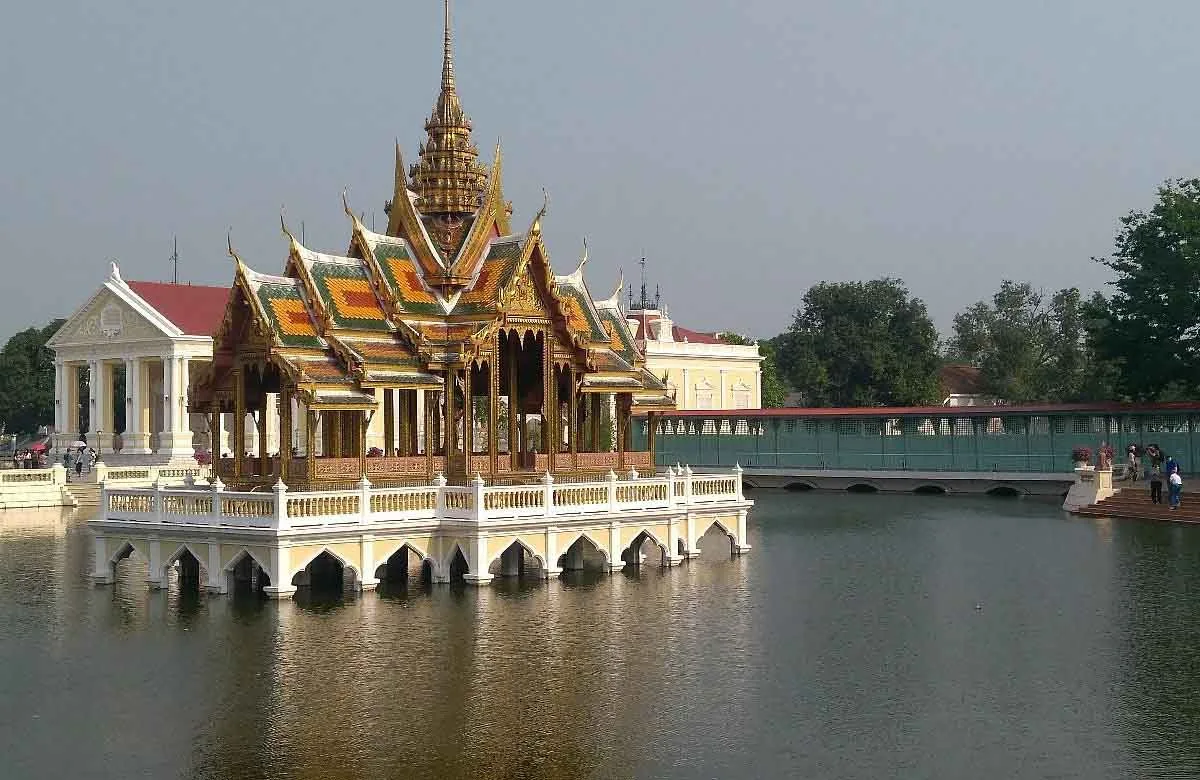
Ultimate Fun Guide to Ayutthaya: Beyond the Ruin Fatigue
This guide covers the fun, non-temple side of Ayutthaya. For the main historical park and temple ruins, read…
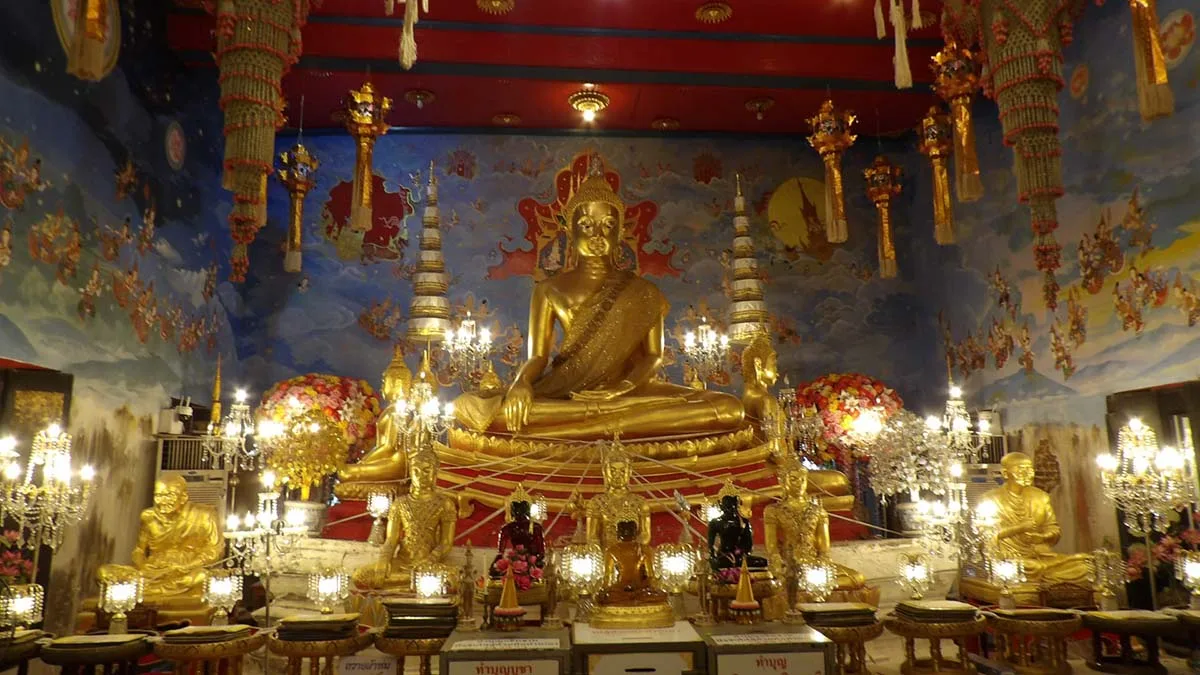
Wat Tha Ka Rong: The “Carnival Temple” of Ayutthaya
This guide covers Wat Tha Ka Rong, the quirky “Carnival Temple” of Ayutthaya. For the full context of…
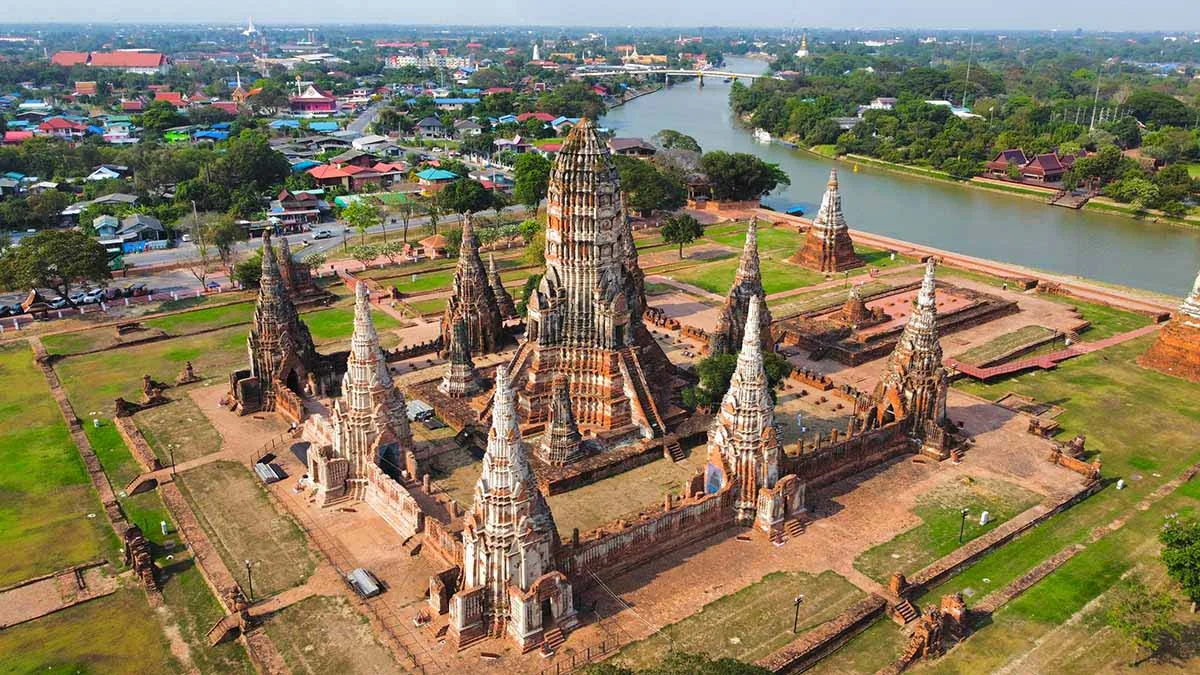
Wat Chaiwatthanaram: The Sunset Temple of Ayutthaya
This guide covers the riverside temple of Wat Chaiwatthanaram in Ayutthaya. For the full context of the historical…