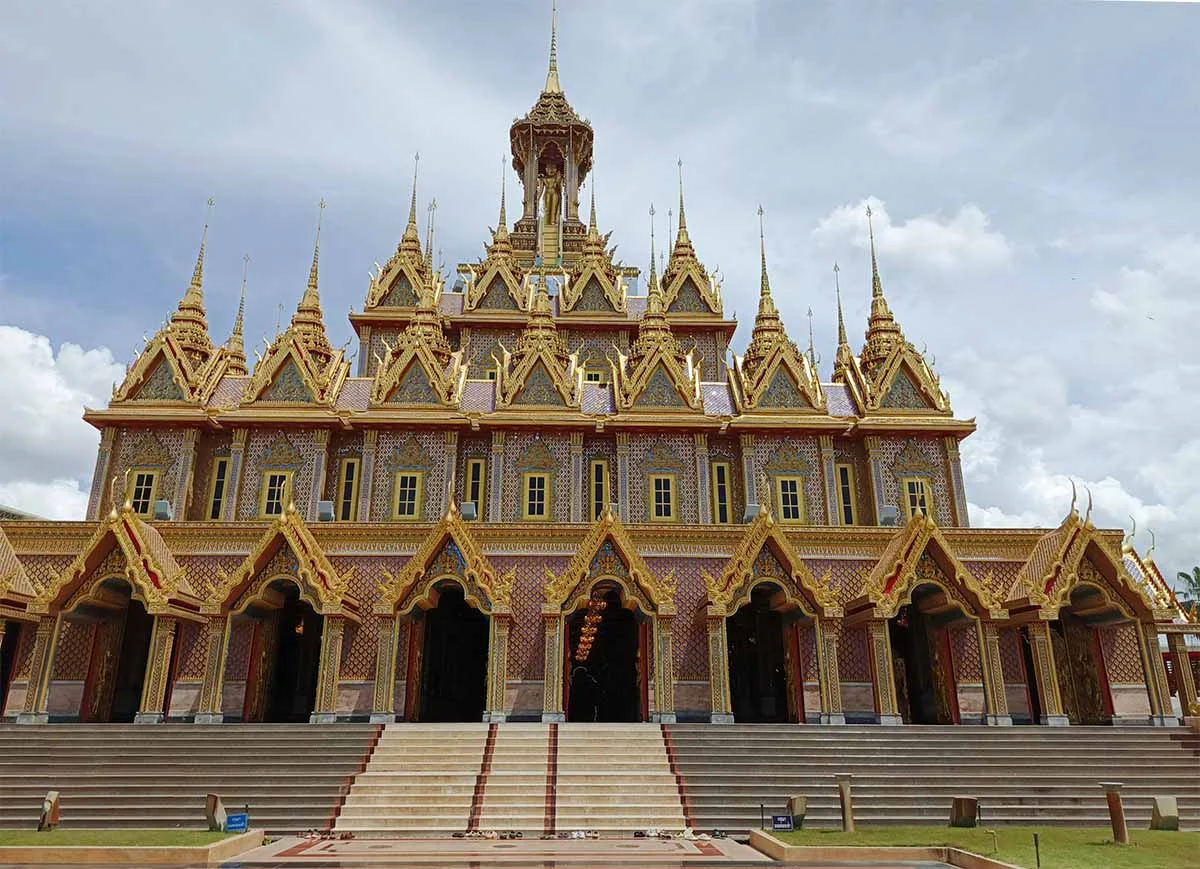

Welcome to your ultimate guide to Thailand’s enchanting cultural heritage – where ancient traditions meet playful surprises. Let’s journey through temples, festivals, food, folklore, and more – with laughter, learning, and layers of respect. If you’re a curious traveler or heritage buff, you’re in the right place!
📋 Table of Contents
- 1Why Thailand’s Cultural Heritage Is a Masterpiece in Motion 🎨
- 2Temples & Architecture: Sacred Skyward Sculptures
- 3Festivals: From Silk Drapes to Songkran Splashes
- 4🏮 Loi Krathong & Yi Peng (Lantern Festivals)
- 5🪷 Songkran (Thai New Year, mid-April)
- 6🎊 Rocket Festival (Bun Bang Fai)
- 7🎭 Phi Ta Khon (Ghost Mask Festival)
- 8Thai Art & Crafts: From Silk to Shadows
- 9Folk Music & Dance: Rhythm Spiced with Storytelling
- 10Literature & Folklore: Myths, Monsters, and Morals
- 11Food Culture: Cuisine as Cultural Currency
- 12Customs & Etiquette: Thai Manners with a Smile
- 13Language & Proverbs: Little Gems of Wisdom
- 14Heritage Preservation: Past Meets Digital Present
- 15Traveling Responsibly: Explore with Purpose
- 16Q: What defines Thailand’s cultural heritage?
- 17Q: Which are must-see UNESCO cultural sites in Thailand?
- 18Q: How do Thailand’s festivals reflect its culture?
- 19Q: Why is the wai greeting important?
- 20Q: How can I support cultural preservation in Thailand?
- 21Q: Is it okay to photograph monks and people?
- 22Q: What traditional Thai crafts should I try or buy?
- 23Bringing It All Together: Why Thailand’s Heritage Matters
- 24Your Cultural Journey: Suggestions & Itineraries
- 25Final Thoughts (With a Smile)
- 26📣 Over to You!
Why Thailand’s Cultural Heritage Is a Masterpiece in Motion 🎨
Thai culture isn’t static – it’s a living mosaic that blends:
Ancient kingdoms like Sukhothai and Ayutthaya, providing structural and artistic foundations.
Buddhism’s 700-year influence, shaping art, ceremonies, and daily values.
Southeast Asian exchange, thanks to trade routes and diplomacy.
Modern DIY flair – Thai creativity never fails to surprise us.
Even though it’s old, it’s never stale – and that’s exactly why it’s worth your time.
Temples & Architecture: Sacred Skyward Sculptures
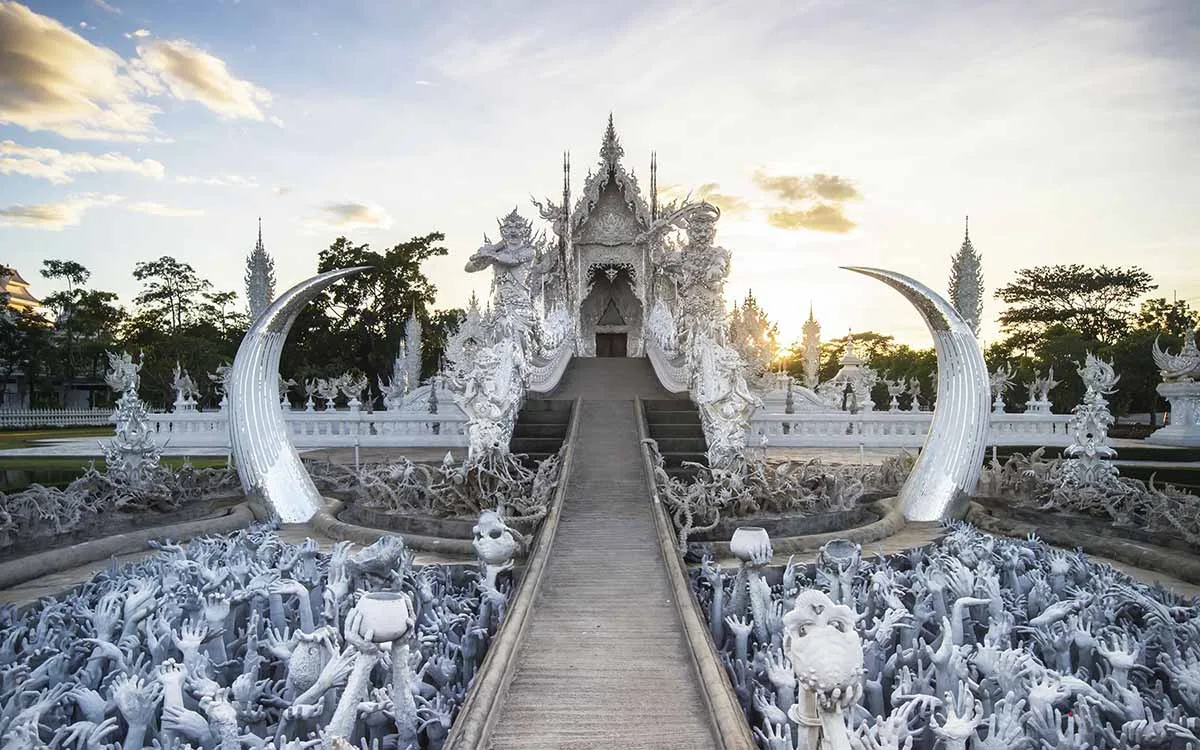
Thailand’s temples (called wats) rise toward the sky – and often surprise you:
Wat Phra Si Sanphet (Ayutthaya)
Once part of the royal palace complex – now a hauntingly beautiful ruin crowned by three towering chedis.
As you duck through arches, you might feel like Indiana Jones – just without the boulder chase.
Home to the 46-meter Reclining Buddha – a serene giant, but watch your head!
After paying respects, sip freshly pressed herbal tea in the monastery clinic. It’s holy and healing.
Wat Rong Khun (White Temple, Chiang Rai)
This dazzling, modern white temple looks like a snow palace – except it’s in tropical Thailand.
Contradiction alert: it’s dripping with symbolism – mirrors of introspection, yet adorned with pop culture cameo art.
Wat Arun (Bangkok’s Temple of Dawn)
Twilight hero of riverside Bangkok – glitters like a jewel at sunset.
Climb up the steep prangs (towers) for epic river views – and prepare for a calf workout.
Each temple is a lesson in harmony – symmetrical roofs, ornate murals, mythological statues, and the chorus of bell towers in the breeze. Yet, there’s also whimsy – from gargoyle-like creatures to cheeky animal sculptures.
Festivals: From Silk Drapes to Songkran Splashes
Thailand’s calendar is a parade of cultural spectacles:
🏮 Loi Krathong & Yi Peng (Lantern Festivals)
What happens: Paper lanterns drift into the sky, and banana-leaf baskets float across rivers.
Why it matters: It’s a spiritual cleanse – gratitude offerings paired with magnificent visuals.
Pro tip: Bring waterproof sandals – you’ll be wading into the water to set your krathong free.

🪷 Songkran (Thai New Year, mid-April)
What happens: Nationwide water fights – armies of buckets, super-soakers, hoses.
Why it matters: It started as a symbolic river-washing act; now it’s also an epic splash war.
Pro tip: Keep your phone dry (waterproof case or a ziploc bag). And don’t miss pouring scented water over elders – it’s sweet tradition.

🎊 Rocket Festival (Bun Bang Fai)
Where & what: Firings of homemade bamboo rockets to summon rain.
Why it matters: Ancient agrarian belief meets community party—sometimes rockets misfire into farmland or the sky.
Pro tip: Stand back, bring earplugs, and cheer as rockets burst overhead.

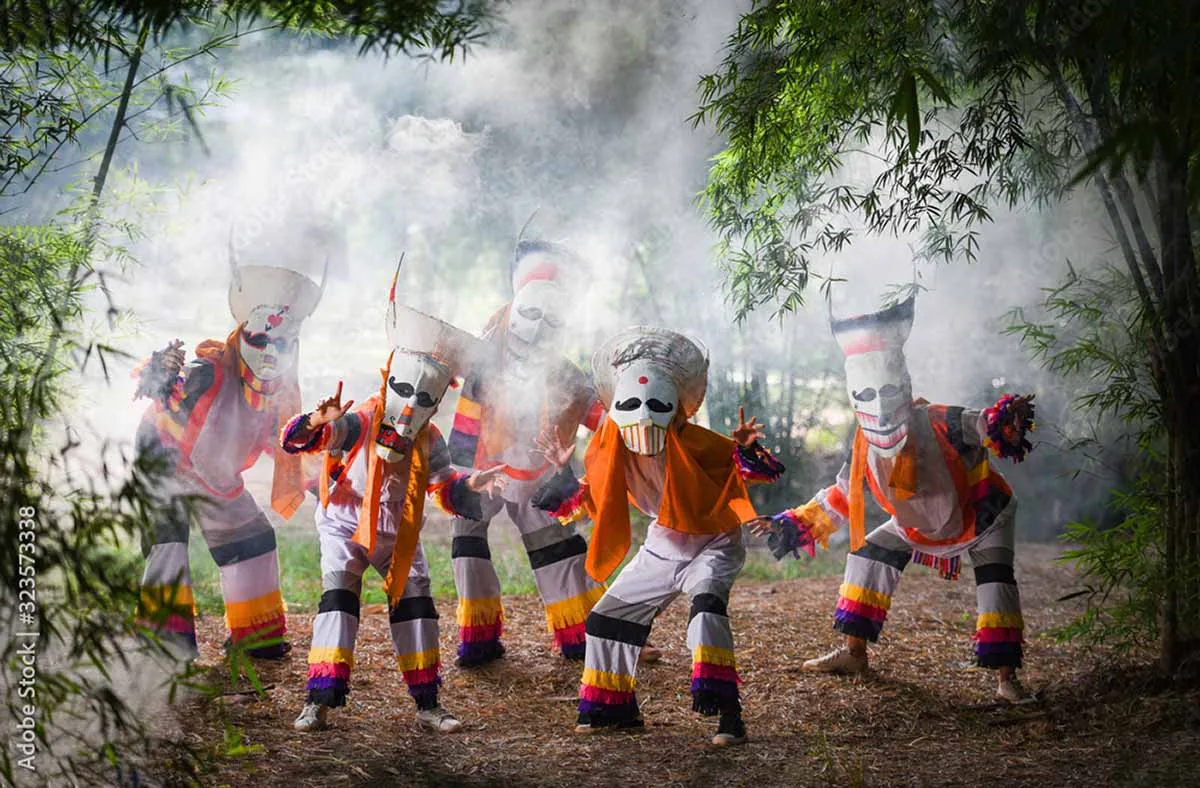
🎭 Phi Ta Khon (Ghost Mask Festival)
What happens: Costumed locals dance around, sporting ghost masks and playful spirits.
Why it matters: Combines Buddhism, animism, and fun—an exorcist-meets-block party vibe.
Pro tip: Bring small bills—you’ll want souvenir mask shots (and the locals might ask for a photo fee).

Thai Art & Crafts: From Silk to Shadows
Artisans in Thailand are magicians with materials:
Silk Weaving (e.g., Jim Thompson or Thai villages):
Luxurious yarn spun from silkworms – colorful, shimmering, and so soft you’ll want to nap in it.Celadon Pottery (Sukhothai & Si Satchanalai):
Jade-like glaze transforms humble clay into museum-grade works – perfect for elegant teacups.Khon Mask-Making:
Hand-painted papier-mâché masks for the classical Khon dance – each face tells a character’s story.Shadow Puppets (Nang Yai/Nang Talung):
Flat, leather puppets cast mythical stories on canvas-screen stages – classic storytelling with spine-chilling shadows.
These crafts remind us: culture isn’t just history; it’s handcrafted, daily, and nuanced.
Folk Music & Dance: Rhythm Spiced with Storytelling
Traditional genres carry stories through beats and footwork:
Khon Dance:
Combining masked performers and Vedic epic scenes – the Ramakien – into a stylized ballet showcasing Thailand’s classics.Piphat Ensemble:
Think xylophones, drums, gongs – like a Thai gamelan orchestra – but tighter, faster, and more syncopated.Mor Lam (Isaan folk music):
Energetic and humorous, similar to rap – lyrics spill the tea on love, life, and daily mischief – set to vibrant rhythms.
These forms are alive – from temple stages to Sunday markets, ensuring heritage is not just seen, but heard, danced, and passed on.
Literature & Folklore: Myths, Monsters, and Morals
Thai folk stories are kaleidoscopes of myth and morality:
The Ramakien:
Thailand’s epic adaptation of the Indian Ramayana – full of monkey generals and heroic kings.Nang Nak:
Famous ghost tale of a devoted wife who haunts the living world – forever yearning for her husband after childbirth. Legend or eerie inspiration for The Unseeable?Mae Nak Phra Khanong:
A Bangkok version of Nang Nak – still widely re-imagined in films and TV today.Krasue:
A nocturnal flying ghost – only a head with dangling internal organs – in rural tales that keep lamp vendors honest.
These stories stir imaginations, keep tradition alive, and add a dose of spooky to your travel radar – especially when shared at night.
Food Culture: Cuisine as Cultural Currency
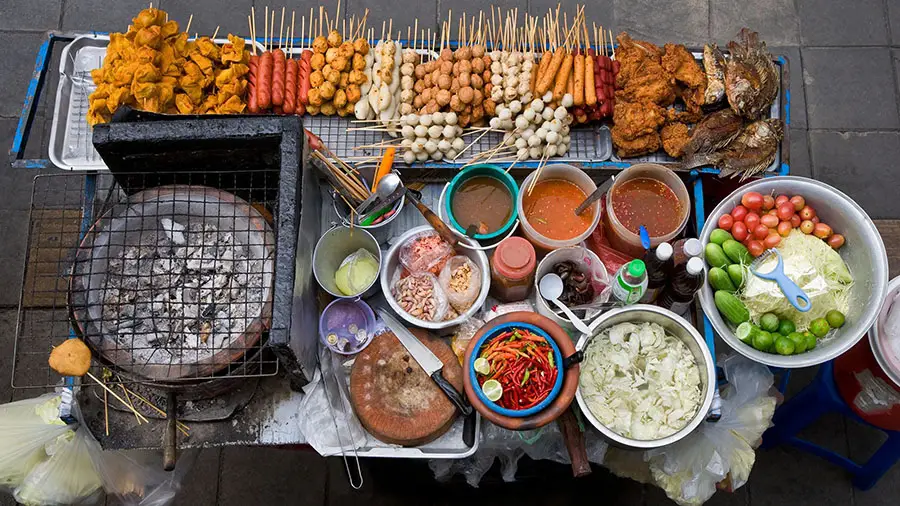
Thailand’s food isn’t just delicious – it’s cultural shorthand:
Street Food (Bangkok & Provincial Towns):
Pad Thai, som tam, moo ping – addictive, sizzling, mouth-watering daily life on plates and carts.Royal Thai Cuisine:
Elevated dishes like kaeng khae or nam phrik ong – coordinated for taste, color, mouthfeel, and prestige.Fermented & Pickled Traditions (Jeud Dip, Pla Ra):
Strong, funky sauces that can shock Western palates – but stick with it! They’re central to Isaan flavors.Fruit & Dessert Crafting (Roti Sai Mai, Khanom Buang):
Roti spun candy floss wraps or crispy Thai crepes filled with sweet coconut – street dessert goals.
Every dish symbolizes history, botany, migration, and class – even the price you pay can signal where it sits on the cultural spectrum.
Customs & Etiquette: Thai Manners with a Smile
To respect Thai people and traditions:
The Wai (palms-pressed greeting):
A rising bow – no contact – used widely. Higher palms show greater respect.Removing shoes:
Mandatory in temples and some homes – so always wear or carry nice socks.Monks and attire:
Don’t touch a monk. Women should never hand anything directly to them. Modest clothing is non-negotiable.Head and Feet awareness:
The head is sacred—avoid touching anyone’s hair. Feet are dirty—don’t point them at people or statues.Saving face:
Communication is soft-smiled and indirect. Keep your cool—even if your taxi driver gets lost!Giving to monks:
Offer food in trays at dawn, but avoid eye contact—humility matters here.
These cultural cues show that humor can respect tradition—Thai-style.
Language & Proverbs: Little Gems of Wisdom
Sprinkle these phrases and observe smiling locals:
“Sabai sabai” – Means “take it easy,” also the nation’s unofficial motto.
“Mai pen rai” – Literally “no matter,” meaning “don’t worry, it’s okay.”
“Chok dee!” – “Good luck!” often said at starting points – fun to shout at Songkran.
Proverbs: “Even the smallest beetle has its own moon.” (Wisdom for appreciating small things.)
These phrases open doors and melt hearts across neighborhood noodle stalls.
Heritage Preservation: Past Meets Digital Present
Thailand mixes ritual with tech-savvy:
UNESCO World Heritage Sites: Sukhothai’s ancient kingdoms and the Ayutthaya Historical Park hold national pride and tourism gravity.
Digital Archives & VR: Students use 3D scans to study ruins; virtual tours of Bangkok’s old city and Chiang Mai’s Silver Temple are widely accessible.
Grassroots Organizations: Village communities revive dances, rebuild bamboo huts, and pass storytelling traditions to kids.
Responsible Tourism: Elephant sanctuaries (no riding), sustainable cooking schools, homestays – heritage becomes shared, not commodified.
Through these, Thailand ensures its rich identity endures, not disappears.
Traveling Responsibly: Explore with Purpose

Do your part to honor this heritage:
Support Local: Hire local guides, eat home-cooked meals, buy artisan products – not mass-manufactured souvenirs.
Avoid Exploitation: Say no to attractions using animals unethically (like riding elephants). Choose cruelty-free options.
Use Water Wisely: Some provinces face shortages – respect water usage, especially for toiletries.
Be Environmentally Minded: Reusable water bottles. Breakable packaging stays home. Pick up after yourself, even at festivals.
Give Back: Volunteer at educational heritage programs or cultural preservation NGOs if you plan long stays.
Little steps amplify impact – stories transformed into legacy.
Q: What defines Thailand’s cultural heritage?
A: It comprises Thailand’s centuries-old temples, festivals, folk arts, royal cuisine, traditional music, proverbs, crafts, and etiquette that reflect its history and Buddhist worldview.
Q: Which are must-see UNESCO cultural sites in Thailand?
A: Visit the Sukhothai Historical Park and Ayutthaya Historical Park—ancient capitals housing iconic temples, ruins, and sculptures.
Q: How do Thailand’s festivals reflect its culture?
A: Festivals like Songkran (water), Loi Krathong (lanterns), Phi Ta Khon (ghosts) showcase seasonal cycles, Buddhist practice, animism, and joyful community bonding.
Q: Why is the wai greeting important?
A: The wai—palms-pressed bow—expresses respect and harmony. Its height communicates esteem, reinforcing social etiquette ingrained in Thai society.
Q: How can I support cultural preservation in Thailand?
A: Choose local guides, volunteer with heritage NGOs, attend non-commercial workshops, and buy from artisan communities.
Q: Is it okay to photograph monks and people?
A: Ask permission, avoid flash, and maintain respectful distance. Treat people as individuals, not props.
Q: What traditional Thai crafts should I try or buy?
A: Seek authentic silk weaving, celadon pottery, hand-painted Khon masks, and leather shadow-puppets for unique souvenirs.
Bringing It All Together: Why Thailand’s Heritage Matters
| Element | Why It Matters |
|---|---|
| Temples & Ruins | Tangible links to bygone eras – from stone-carved stories to dynastic ruins. |
| Festivals & Rituals | Bring communities together, blending doctrine and fun in unison. |
| Arts & Crafts | Skill, symbols, and stories expressed through hands-on masterpieces. |
| Food & Proverbs | Daily items that speak volumes – heritage is delicious and digestible. |
| Customs & Structures | Manners reflect values; weaving a respectful socio-cultural tapestry. |
Through all this, heritage does more than remind us of the past – it animates communities, empowers locals, appeals to travelers, and encourages stewards of culture for future generations.
Your Cultural Journey: Suggestions & Itineraries
Long Weekend (Bangkok + Ayutthaya):
• Grand Palace → Wat Pho → cruise to Ayutthaya → temple biking tour → sunset over ruins.Festival Trip:
• Visit in April (Songkran) or November (Loi Krathong) with local homestays and temple ceremonies.Northern Focus (Chiang Mai/Lampang):
• Elephant Sanctuary + Doi Suthep → cultural villages → Phrae for historical teak mansions.Creative Arts Trip:
• Attend workshops in Chiang Mai – silk weaving, puppet-making, masked Khon performance.
Make it your journey – curated with kindness, context, and curiosity.
Final Thoughts (With a Smile)
Thailand’s cultural heritage is the perfect blend of sacred, sartorial, saucy, and stunning – equally serious and spirited. From riverside temples to satirical folk theatre, your senses get a full workout. But beyond the temples and festivals lies something deeper: connection – forged through rituals, shared meals, time-honored skills, and mutual respect.
📣 Over to You!
Have you danced in the rain at Songkran? Made your own shadow puppet? Or had your mind blown by a silk-weaving workshop? Share your travels, thoughts, and quirky stories below – we’d love to hear how Thailand’s heritage touched you. Plus, if you’re inspired, please share this post across your socials – help fellow wanderers find their own Thai odyssey.
Let’s celebrate Thailand’s past, present, and future – together! 🇹🇭
You Might Also Like
Thai Superstitions Travelers Should Know
Thailand isn’t just about stunning beaches, spicy food, and tuk-tuk rides that defy physics – it’s also a…
Handy Coast-by-Coast Guide to Thailand Beach Season
Handy Coast-by-Coast Guide to Thailand Beach Season: When to Visit Which Coast (And How Not to Get Soaked)…

What to Pack for Thailand 2025-2026: A Month-by-Month Guide
Welcome to the only packing guide you’ll ever need for Thailand, month by gloriously unpredictable month. Whether you’re…