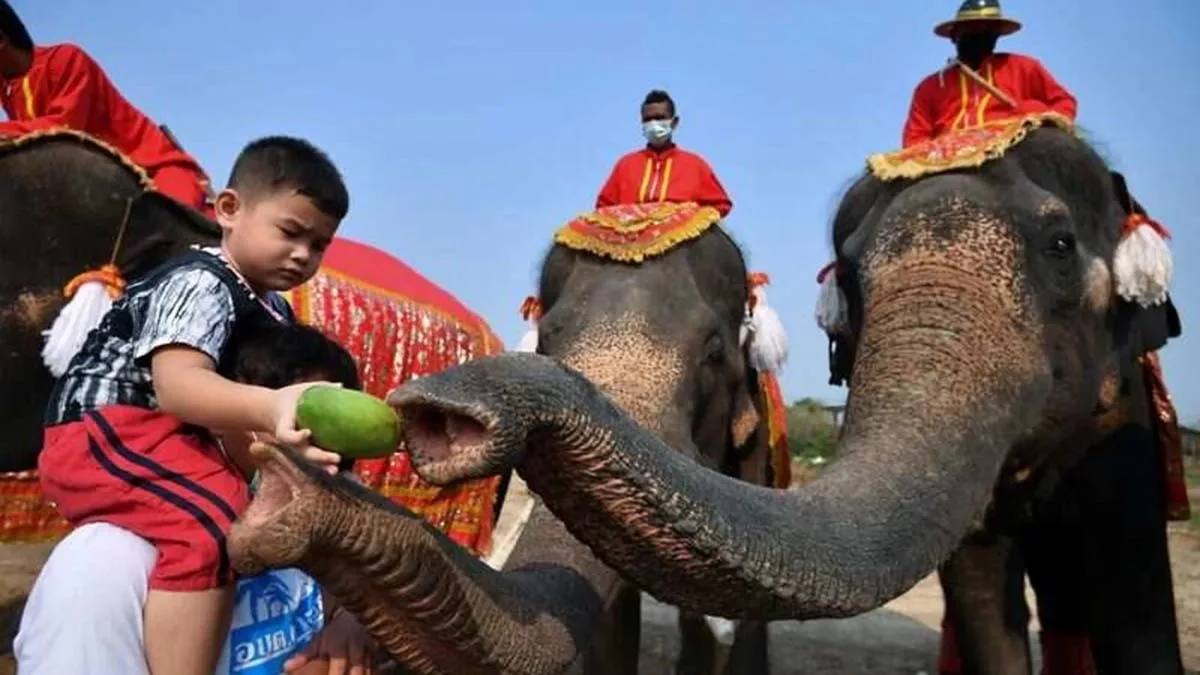

This guide covers the Royal Elephant Kraal National Museum in Ayutthaya, a historical site. For active elephant camps, note that Thai Hub does not recommend riding elephants. For ethical sanctuaries elsewhere in Thailand, see our separate guide (coming soon).
- 1Key Takeaways
- 2Quick Facts
- 3What is the Royal Elephant Kraal?
- 4The History of the Royal Elephant Kraal
- 5What You Will See at the Museum
- 6The Problem with Active Elephant Camps in Ayutthaya
- 7How to Visit the Royal Elephant Kraal Museum (Ethically)
- 8Costs and Budget
- 9Best Time to Visit
- 10Essential Tips and Etiquette
- 11Where to Go Next
- 12The Contrarian Truth About Elephant “Sanctuaries” in Ayutthaya
- 13Summary
Key Takeaways
- This is a historical site, not an active riding camp. It is the location of the Royal Elephant Kraal, used for centuries to capture wild elephants for the Thai army.
- There is a small museum on site. You can see traditional elephant training equipment and learn about the history of the elephant corps.
- You may see elephants at the site. They are often chained. This is not an ethical sanctuary.
- Thai-Hub does not recommend riding elephants. Any camp offering rides is not ethical. Do not support them.
- Visit the museum for the history. Do not visit to interact with elephants.
Quick Facts
| Category | Detail |
|---|---|
| Location | Ayutthaya, near the historical park |
| Historical Period | Built in the 16th century, used until the 19th century |
| Original Purpose | Royal elephant kraal (enclosure) for capturing and training wild elephants |
| Current Status | National museum and historical site |
| Entry Fee | Approximately 100-200 THB (check current prices) |
| What You Will See | A large wooden stockade, a small museum, elephant-related artifacts |
| What You Will Not See (Ethically) | Elephant rides, shows, or chains (ideally) |
| Best For | History buffs, those interested in Thai military history |
What is the Royal Elephant Kraal?
The Royal Elephant Kraal (พระที่นั่งเพนียด) is a large, wooden stockade enclosure in Ayutthaya. It was historically used to capture wild elephants for the Siamese army. The current structure dates from the 16th century, though elephant kraals have existed on this site for much longer.
The site includes a museum with artifacts related to elephant capture and training. It is a historical monument, not a modern elephant camp. You go here to learn about the role of elephants in Thai history, not to ride them.
This is not a guide to elephant riding. It is not a recommendation to visit any camp where elephants are ridden, chained, or forced to perform. Thai Hub does not support those activities. This guide is for the historical museum only.
The History of the Royal Elephant Kraal
| Period | Event |
|---|---|
| Pre-16th century | Wild elephants were captured in the area for use in war and ceremony. |
| 16th century | King Maha Chakkraphat built the formal kraal structure. |
| Ayutthaya Period | The kraal was used to capture elephants for the king’s army. |
| Rattanakosin Period | The practice continued under the Bangkok kings. |
| 1903 | The last wild elephant capture took place at the kraal. |
| Present | The site is a national museum, open to the public. |
The kraal itself is a massive wooden pen. Elephants were herded inside, and the gates were closed. The best elephants were selected for the king’s army. The rest were released.
What You Will See at the Museum
| Exhibit | What It Shows |
|---|---|
| The Kraal Stockade | The huge wooden enclosure itself. You can walk around it. |
| Training Equipment | Traditional tools used to train elephants for war and ceremony (hows, ropes, etc.). |
| Historical Photos | Images of the last elephant capture in 1903. |
| Elephant Skeleton | A full skeleton of a working elephant. |
| Artifacts | Items related to the royal elephant corps. |
The museum is small. You can see everything in 30-45 minutes. The kraal structure is the main attraction.
The Problem with Active Elephant Camps in Ayutthaya
There are several active “elephant villages” and camps near the kraal. They offer rides, shows, and “bathing” experiences.
| Practice | Why It Is Harmful |
|---|---|
| Riding | The spine of an elephant is not built to carry a howdah (seat) or multiple people. It causes long-term injury. |
| Chaining | Elephants are often chained for hours when not performing. |
| Training (Phajaan) | The “crushing” process used to break a wild elephant’s spirit is brutal. |
| Shows | Performing tricks requires punishment-based training. |
Thai Hub does not recommend any camp that allows riding. There are no truly ethical elephant sanctuaries in Ayutthaya province. The only verified ethical sanctuaries in Thailand are far from here (e.g., Elephant Nature Park near Chiang Mai).
How to Visit the Royal Elephant Kraal Museum (Ethically)
| Method | From | Cost (Approx) | Notes |
|---|---|---|---|
| Tuk-tuk | Ayutthaya city | 150-250 THB (round trip) | Tell the driver “Royal Elephant Kraal Museum.” Do not let them take you to a riding camp. |
| Bicycle | Ayutthaya train station | 40-60 THB/day | 20-30 minutes. The ride is flat. |
| Songthaew (shared taxi) | From the minivan terminal | 20-30 THB per person | Less common. |
Do not ask a tuk-tuk driver to take you to an “elephant village.” They will take you to a riding camp. Be very clear: you want the historical museum.
Costs and Budget
| Item | Approx Cost (THB) |
|---|---|
| Museum entry fee | 100-200 |
| Tuk-tuk (round trip) | 150-250 |
| Total for this site (excluding transport to Ayutthaya) | 250-450 THB |
Best Time to Visit
| Time of Day | Verdict |
|---|---|
| Morning (9-11 AM) | Best time. Cooler. The museum is open. |
| Afternoon (1-3 PM) | Hot. Minimal shade at the kraal. |
| Late Afternoon (4-5 PM) | The light is good for photos of the wooden stockade. |
Essential Tips and Etiquette
- Do not ride elephants. Not here. Not anywhere.
- Do not pay to bathe elephants. Bathing involves close contact and is often stressful for the animals.
- Do not attend elephant shows.
- If you see elephants in chains, leave. Do not support the camp with your entry fee.
- Visit the museum for the history. Learn about the past. Do not contribute to the suffering of elephants in the present.
Where to Go Next
The Royal Elephant Kraal is near the main historical park.
- Visit the main ruins after the museum: Ayutthaya Historical Park.
- See the iconic Wat Mahathat for the Buddha head in the tree.
The Contrarian Truth About Elephant “Sanctuaries” in Ayutthaya
There are no ethical elephant sanctuaries in Ayutthaya. The camps that offer rides, shows, and bathing are not sanctuaries. They are commercial operations that prioritize tourist money over animal welfare.
Do not be fooled by the word “sanctuary.” Look for signs of cruelty: chains, hooks, riding saddles, and shows. If you see any of these, leave.
The only ethical way to see elephants in Thailand is to visit a verified sanctuary like Elephant Nature Park (near Chiang Mai), where riding is prohibited, and the elephants roam freely.
Summary
The Royal Elephant Kraal in Ayutthaya is a historical museum site, not an active elephant camp. It was used to capture wild elephants for the Siamese army. The site includes a large wooden stockade and a small museum. Thai-Hub does not recommend elephant riding or any camp that offers rides, shows, or bathing. Verified ethical sanctuaries exist elsewhere in Thailand, not in Ayutthaya.
Learn the history. Do not support the cruelty.
- Visit the Royal Elephant Kraal Museum for the history of elephants in war.
- Then explore the Ayutthaya Historical Park.
If you want to see elephants ethically, plan a trip to Elephant Nature Park near Chiang Mai (guide coming soon). Do not ride. Do not support camps that offer rides.
Have you seen elephants in chains in Ayutthaya? Report the camp name in the comments to warn other travelers.
This article is part of Ayutthaya cluster. Be sure to also read about: Ayutthaya Floating Market, Royal Elephant Kraal, Ultimate Fun Guide to Ayutthaya, Ayutthaya vs Sukhothai, Guide to Exploring the Ayutthaya Kingdom, Wat Ratchaburana, Wat Tha Ka Rong, Wat Yai Chai Mongkhon, Bang Pa-In Royal Palace, Wat Phra Si Sanphet, Wat Chaiwatthanaram, Wat Mahathat, Ayutthaya Historical Park
You Might Also Like
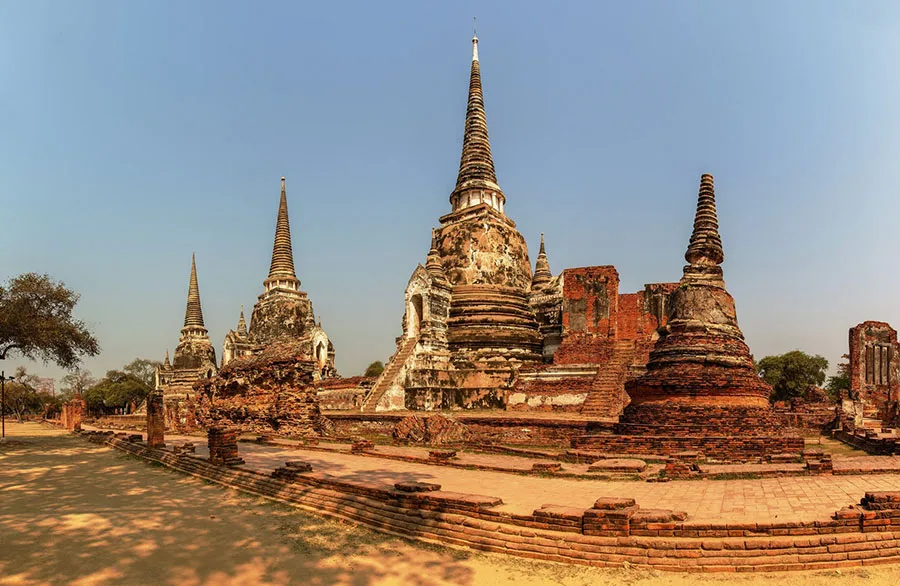
Wat Phra Si Sanphet: Ayutthaya’s Golden Crown
This guide covers the royal temple of Wat Phra Si Sanphet in Ayutthaya. For the full context of…
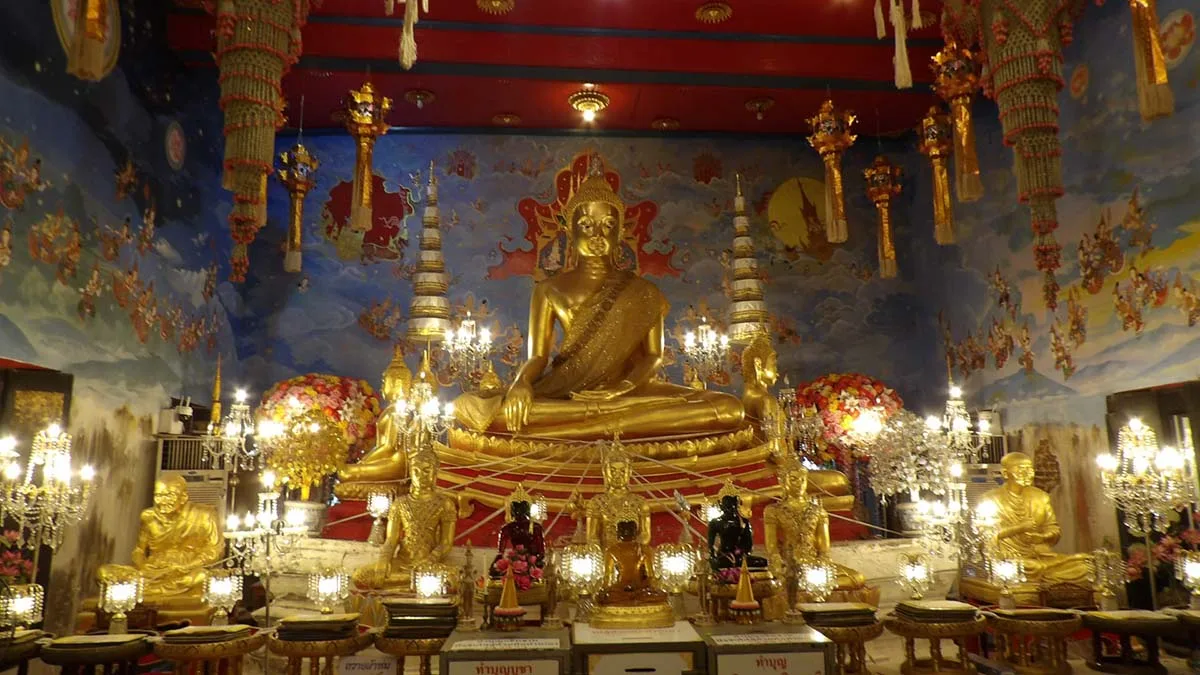
Wat Tha Ka Rong: The “Carnival Temple” of Ayutthaya
This guide covers Wat Tha Ka Rong, the quirky “Carnival Temple” of Ayutthaya. For the full context of…
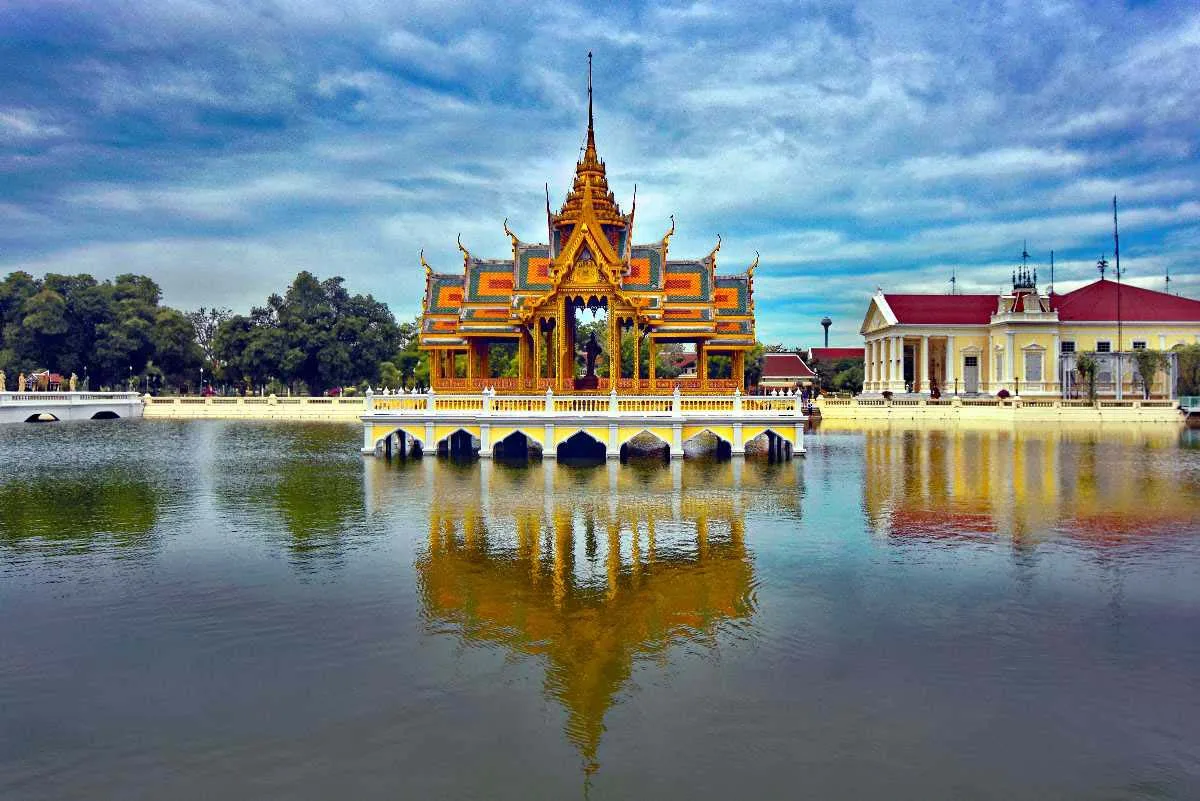
Bang Pa-In Royal Palace: The Summer Palace of Thai Kings
This guide covers the Bang Pa-In Royal Palace, the summer retreat of Thai kings, located south of Ayutthaya.…