
This guide covers Wat Yai Chai Mongkhon, the “Temple of Victory” in Ayutthaya. For the full context of the historical park and the story of the other ruins, read the Ayutthaya Historical Park guide.
Key Takeaways
- This is an active temple, not just a ruin. Monks still live and pray here. Be respectful.
- You can climb the main chedi (62 meters tall). The stairs are steep. The view of Ayutthaya from the top is one of the best.
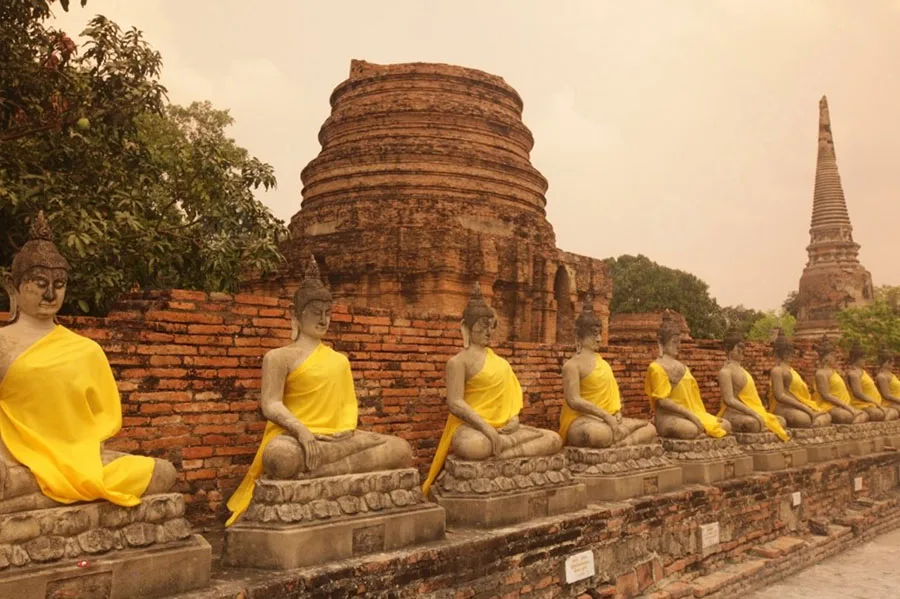
- The temple is famous for the long row of Buddha statues in meditation posture. They are great for photography, especially in the late afternoon light.
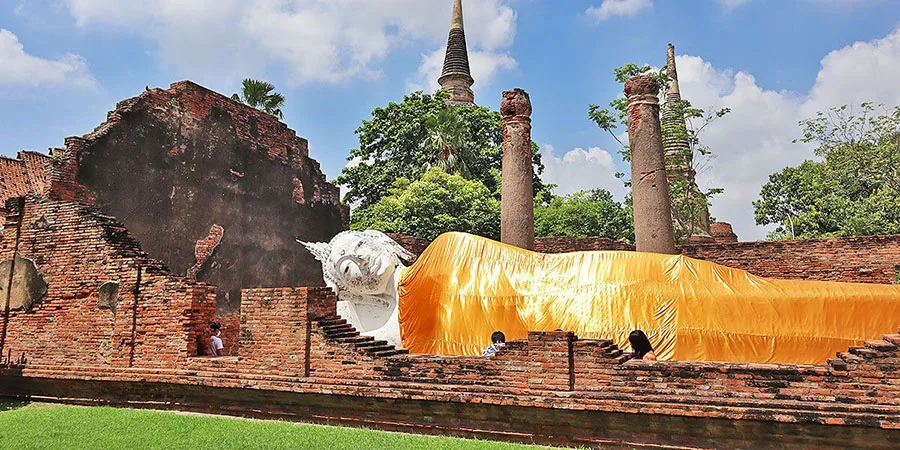
- The reclining Buddha is smaller than Wat Pho’s in Bangkok, but it is outdoors and less crowded.
- The name “Yai Chai Mongkhon” means “Great Victory.” King Naresuan built the main chedi to celebrate defeating the Burmese in a famous elephant duel.
Quick Facts
| Category | Detail |
|---|---|
| Location | Southeast of Ayutthaya Historical Park, Ayutthaya, Thailand |
| Built | Originally 1357 CE (King U-Thong). Main chedi added in 1592 CE. |
| Built By | King U-Thong (original monastery). King Naresuan (main victory chedi). |
| Original Purpose | Monastery for monks trained in the Sri Lankan Buddhist tradition |
| Famous For | The 62-meter tall victory chedi, the long row of meditation Buddha statues, the reclining Buddha |
| Entry Fee | 20 THB for foreign tourists |
| Dress Code | Shoulders and knees covered. Strictly enforced. It is an active temple. |
| Best Time to Visit | November to February (cool, dry). 8:00 AM or 4:00 PM for best light on the statues. |
| Time Needed | 45 minutes to 1 hour |
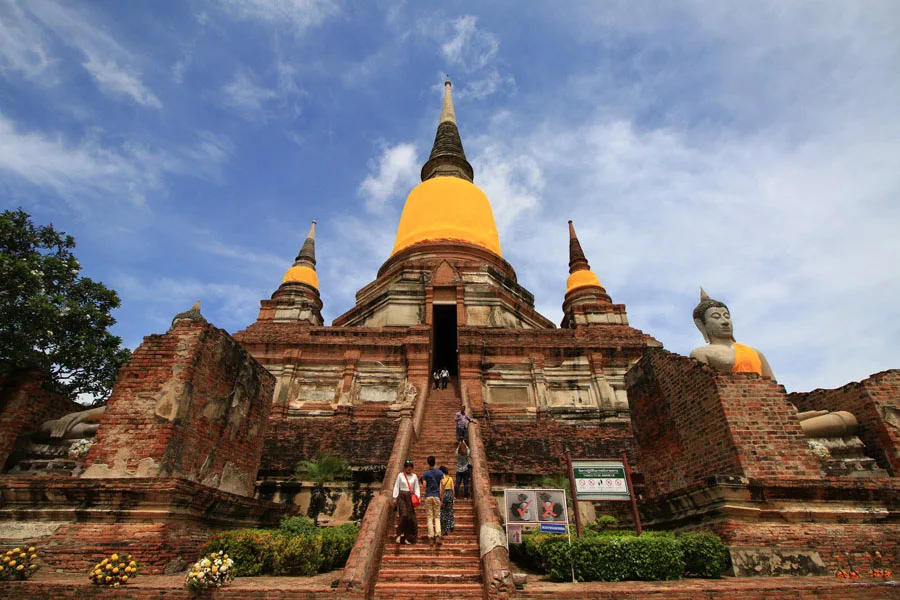
What is Wat Yai Chai Mongkhon?
Wat Yai Chai Mongkhon (วัดใหญ่ชัยมงคล) is an active Buddhist temple in Ayutthaya. Its name translates to “Great Monastery of Auspicious Victory.”
The temple was originally built in 1357 as a meditation monastery for monks trained in the Sri Lankan Buddhist tradition. Its main feature, the massive 62-meter tall chedi (stupa), was added later by King Naresuan to commemorate his famous elephant duel victory over the Burmese crown prince in 1592.
Unlike the ruined temples in the central zone, this temple has been continuously used and restored. The main chedi is intact. You can climb it. The reclining Buddha is outdoors and active. The rows of Buddha statues are a popular photography spot.
For the full context of the park, read the Ayutthaya Historical Park guide.
This is not a quiet, ruined meditation spot (though it was originally). It is a major tourist destination and an active temple. It is also not a place for drone flying without permission. And it is not a place to wear your beach clothes. Dress properly.
The Main Features
| Feature | Detail | Notes |
|---|---|---|
| The Main Chedi (Victory Stupa) | 62 meters tall. You can climb steep stairs to the top. The view of the surrounding rice paddies and the city is excellent. | Built to celebrate King Naresuan’s victory. The stairs are original and worn. Wear sturdy shoes. |
| The Reclining Buddha | A large, outdoor reclining Buddha. It is covered in a golden cloth. Locals come to pay respects and offer flowers. | Smaller than Wat Pho’s in Bangkok. Less crowded. |
| The Row of Meditation Buddhas | A long line of Buddha statues in the meditation posture (Maravijaya). They line the walkway leading to the main chedi. | Excellent for photography, especially in the late afternoon light when the shadows are long. |
| The Ordination Hall (Ubosot) | The main hall for monk ceremonies. Visitors can enter respectfully. No shoes. | Look for the intricate murals inside. |
| The Bell Tower | A traditional Thai bell tower. Not as famous as the chedi, but part of the active temple complex. |
Do not just climb the chedi and leave. Walk the grounds. Look at the row of Buddha statues from different angles. Watch the local worshippers.
The Victory Story (King Naresuan’s Elephant Duel)
| Event | Detail |
|---|---|
| Date | 1592 CE |
| Location | Near Suphan Buri (not Ayutthaya city) |
| The Duel | King Naresuan of Siam challenged the Burmese crown prince to a duel on elephant back. He won, killing the prince. |
| Result | A decisive Siamese victory. Ayutthaya remained independent. |
| The Monument | King Naresuan ordered the construction of a large chedi at Wat Yai Chai Mongkhon to celebrate his victory. |
The chedi you climb is that victory monument. The temple’s name changed to reflect this. “Yai” (large) and “Chai Mongkhon” (auspicious victory).
How to Get to Wat Yai Chai Mongkhon
| Method | From | Cost (Approx) | Time | Notes |
|---|---|---|---|---|
| Bicycle | Ayutthaya train station | 40-60 THB/day | 15-20 minutes | A straight, flat ride southeast of the central zone. |
| Tuk-tuk | From the central zone | 150-250 THB (round trip) | 10-15 minutes | Negotiate a round-trip price that includes waiting time. |
| Songthaew (shared taxi) | From the minivan terminal | 20-30 THB per person | 15-20 minutes | Less common. Not reliable for return. |
From Bangkok, take the train (1.5-2 hours) or a minivan (1-1.5 hours) to Ayutthaya. Then use one of the above methods.
Costs and Budget
| Item | Approx Cost (THB) |
|---|---|
| Temple entry fee | 20 |
| Bicycle rental (full day) | 40-60 |
| Water | 20-40 |
| Total for this temple (excluding transport to Ayutthaya) | 80-120 THB |
Best Time to Visit
| Season | Weather | Photography | Verdict |
|---|---|---|---|
| Nov-Feb | Cool, dry, pleasant | Excellent light in the late afternoon | Best time. Go early (8 AM) or late (4 PM). |
| Mar-May | Very hot (35-40°C), smoggy | Hazy skies. The climb will be brutal. | Not recommended. |
| Jun-Oct | Afternoon showers, lush greenery | Dramatic skies. The green grass contrasts well with the dark chedi. | The grass and trees are green. Bring a raincoat. |
The single most important tip: Visit the central zone temples in the morning. Come here in the late afternoon (3:00-4:00 PM) for the best light on the row of Buddha statues. The chedi climb is also cooler.
Essential Tips and Etiquette
- Dress code is strictly enforced. This is an active temple. No shorts. No sleeveless shirts. No ripped jeans. You will be denied entry.
- Remove your shoes before entering the ordination hall (ubosot) or any building.
- Climb the chedi carefully. The stairs are steep and worn. Hold the railings. Do not rush.
- Do not climb on the Buddha statues (the row of meditation Buddhas). They are sacred objects.
- Do not fly drones without explicit permission from the temple authorities.
- Bring water. The climb is a workout. There is no shade at the top of the chedi.
Where to Go Next
Wat Yai Chai Mongkhon is southeast of the central zone. It is a quick bicycle ride or tuk-tuk trip away.
- Combine it with a visit to the Ayutthaya Historical Park central zone.
- See Wat Mahathat and Wat Phra Si Sanphet in the morning.
- Visit Wat Yai Chai Mongkhon in the late afternoon.
Plan your whole day with the Ayutthaya Historical Park guide.
The Truth About Wat Yai Chai Mongkhon
This is a restored, active temple. It is not a “ruin” in the way that Wat Mahathat is a ruin. The chedi is intact. The Buddha statues have been repaired. Some travelers prefer the more atmospheric, crumbling sites.
Do not skip it because it looks “newer.” The victory story is real. The climb is rewarding. The row of meditation Buddhas is genuinely photogenic. Come for the history, not for the crumbling bricks.
Summary
Wat Yai Chai Mongkhon is an active Buddhist temple in Ayutthaya, Thailand. It was built in 1357 and expanded in 1592 by King Naresuan to commemorate his victory over the Burmese. The temple is famous for its 62-meter tall chedi, which visitors can climb, a large outdoor reclining Buddha, and a long row of Buddha statues in meditation posture. The entry fee is 20 THB for foreign tourists. The dress code requires covered shoulders and knees. It is located southeast of the Ayutthaya Historical Park.
Wat Yai Chai Mongkhon is the perfect late afternoon addition to your Ayutthaya itinerary.
- See the central zone ruins (Wat Mahathat, Wat Phra Si Sanphet) in the morning.
- Visit Wat Yai Chai Mongkhon in the late afternoon for the best light on the meditation statues.
- Plan your whole day with the Ayutthaya Historical Park guide.
This article is part of Ayutthaya cluster. Be sure to also read about: Ayutthaya Floating Market, Royal Elephant Kraal, Ultimate Fun Guide to Ayutthaya, Ayutthaya vs Sukhothai, Guide to Exploring the Ayutthaya Kingdom, Wat Ratchaburana, Wat Tha Ka Rong, Wat Yai Chai Mongkhon, Bang Pa-In Royal Palace, Wat Phra Si Sanphet, Wat Chaiwatthanaram, Wat Mahathat, Ayutthaya Historical Park
You Might Also Like
Secret Ayutthaya: Hidden Gems You Won’t Find in the Main Guides
This guide covers the hidden gems of Ayutthaya, places off the main tourist trail. For the main temples…
Wat Mahathat in Ayutthaya: Thailand’s Most Iconic Temple Ruin with Buddha Head in the Tree
Introduction Located in the heart of the ancient city of Ayutthaya, Wat Mahathat is one of the most…
Ultimate Fun Guide to Ayutthaya: Beyond the Ruin Fatigue
This guide covers the fun, non-temple side of Ayutthaya. For the main historical park and temple ruins, read…